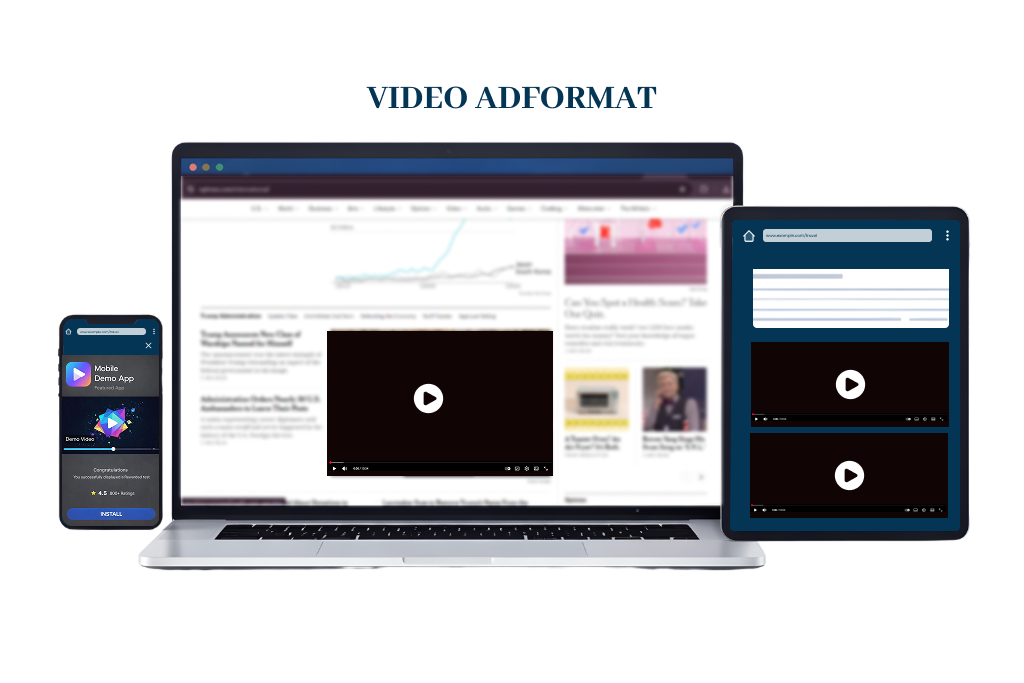












image
image
image
image
image
image
image
image
image

Empowering Advertisers and Publishers

Adstork is a cutting-edge online marketplace designed to connect advertisers with publishers in a seamless and efficient manner. Whether you’re an advertiser looking to reach your target audience or a publisher aiming to monetize your platform, Adstork provides the tools you need. Advertisers can easily submit their ads, configure target audiences, and set budgets through a user-friendly Advertiser Account.

K+

Active Publisher Websites

+

Billion Daily Impression

+

Anti Bot and Bad Traffic Rules

K

Active Advertiser Campaigns
image

Benefit from Adstork

Our ad network ensures precise targeting, connecting advertisers with high-quality publishers to maximize engagement and drive exceptional results.


Advertiser

  • Premium, global traffic across all geographic regions
  • Advanced targeting options surpassing other networks
  • Proprietary Ad server technology
  • Tailored solutions for brands

Publisher

  • Boost monetization by 30% compared to previous methods
  • Multiple payout options available
  • Optimize revenue from both web and mobile traffic
  • Only premium, non-intrusive ads

RTB/XML

  • Seamless integration with advanced XML/RTB protocols
  • Access to high-quality, real-time bidding opportunities
  • Programmatic ad revenue boost
  • Fast, reliable ad delivery

Why Choose Adstork?

Adstork is the ideal platform for posting your advertisements and connecting with publishers, whether you're an individual, a group, or an organization. Adstork has evolved into a global movement, uniting activists from all corners of the world.

Advanced Ad Safety and Fraud Prevention

Adstork uses anti-fraud algorithms to ensure ad safety and quality traffic.

Optimized Ad Performance Tools

Our platform offers custom targeting and creative templates to boost ad impact and results.

Comprehensive Analytics

Make data-driven decisions with Adstork’s analytics tools and performance insights.

image
Global Reach with Massive Traffic Volume

Adstork delivers 5B+ daily impressions globally for unmatched reach.

Flexible Automation Options

Adstork offers CPA Goal and auto-rules for precise, automated campaign management.

Dedicated Partner Support

Our expert team is available 24/7 to optimize campaigns and monetize traffic.

Explore our Adformats

Driving High-Quality Ads and Targeted Traffic

image

How Adstork Work

Adstork streamlines digital advertising by linking advertisers with leading publishers. Our platform utilizes advanced targeting to ensure your ads reach the ideal audience.

1
Signup

Begin your journey by creating an account. Sign up to access a world of advertising opportunities with Adstork.

2
Make Deposit

"Make a deposit that aligns with your advertising goals."

3
Setup Campaign

Jumpstart your advertising success. Set up your campaign by defining your target audience, budget, and schedule to maximize reach.

4
Publish Ads

Present your brand to the world. Launch engaging ads that capture attention and boost interaction.

5
Track Ads Performance

Track your campaign's impact in real-time. Monitor performance, analyze data, and adjust strategies for the best results.

1
Signup

Begin your journey by creating an account. Sign up to access a world of advertising opportunities with Adstork.

2
Add Your Website

Add your website to get started.

3
Setup Zone

Jumpstart your advertising success. Set up your campaign by defining your target audience, budget, and schedule to maximize reach.

4
Publish Ads

Present your brand to the world. Launch engaging ads that capture attention and boost interaction.

5
Track Your Revenue

Track your campaign's impact in real-time. Monitor performance, analyze data, and adjust strategies for the best results.

1
Request Access

Start by requesting XML / RTB access. Our team verifies your platform, traffic quality, and compliance to enable integration.

2
Share Endpoint & Parameters

Provide your RTB endpoint or XML feed details, including bid request format, macros, floor price, and supported ad sizes.

3
Technical Integration

Integrate with our RTB / XML infrastructure. We support OpenRTB standards for seamless, low-latency bidding.

4
Go Live & Start Bidding

Once approved, traffic goes live. Advertisers bid in real time, ensuring competitive CPMs and maximum fill rates.

5
Monitor & Optimize Performance

Track bid responses, win rates, revenue, and traffic quality in real time. Optimize floors, formats, and demand sources for better yield.

What Our Customers Are Saying

Real voices, real results. Go beyond the numbers and experience the passion. Unlock your potential—we believe in you.


Daniel Harris
Zhao Yifan
Leland French
Jason Mitchell
Daniel Harris
Ad Operations Manager, Tech Publisher

“Adstork played a key role in helping us scale our ad operations without sacrificing user experience. Their smart optimization and premium demand sources delivered sustainable growth. We see them as a long-term strategic partner.”

Zhao Yifan
Business Development Manager, Media Network

“Reliability and transparency are critical in ad tech, and Adstork excels at both. Payments are always on time, traffic quality is well maintained, and communication is clear. It’s refreshing to work with an ad network that truly values partnerships.”

Leland French
Senior Media Buyer

“Adstork provides us with high quality inventory and excellent campaign performance. Their targeting capabilities and optimization support helped us achieve better ROI compared to other networks. The team understands advertiser needs and delivers results efficiently.”

Jason Mitchell
Director, Digital Advertising Solutions

"Working with Adstork Ad Network has been a truly rewarding experience. Their platform delivers consistent performance, transparent reporting, and high quality demand that maximizes our revenue without compromising user experience. The Adstork team stands out for their responsiveness, technical expertise, and deep understanding of the digital advertising ecosystem"

Insights from Adstork

Get Latest Update from Advertising Industry
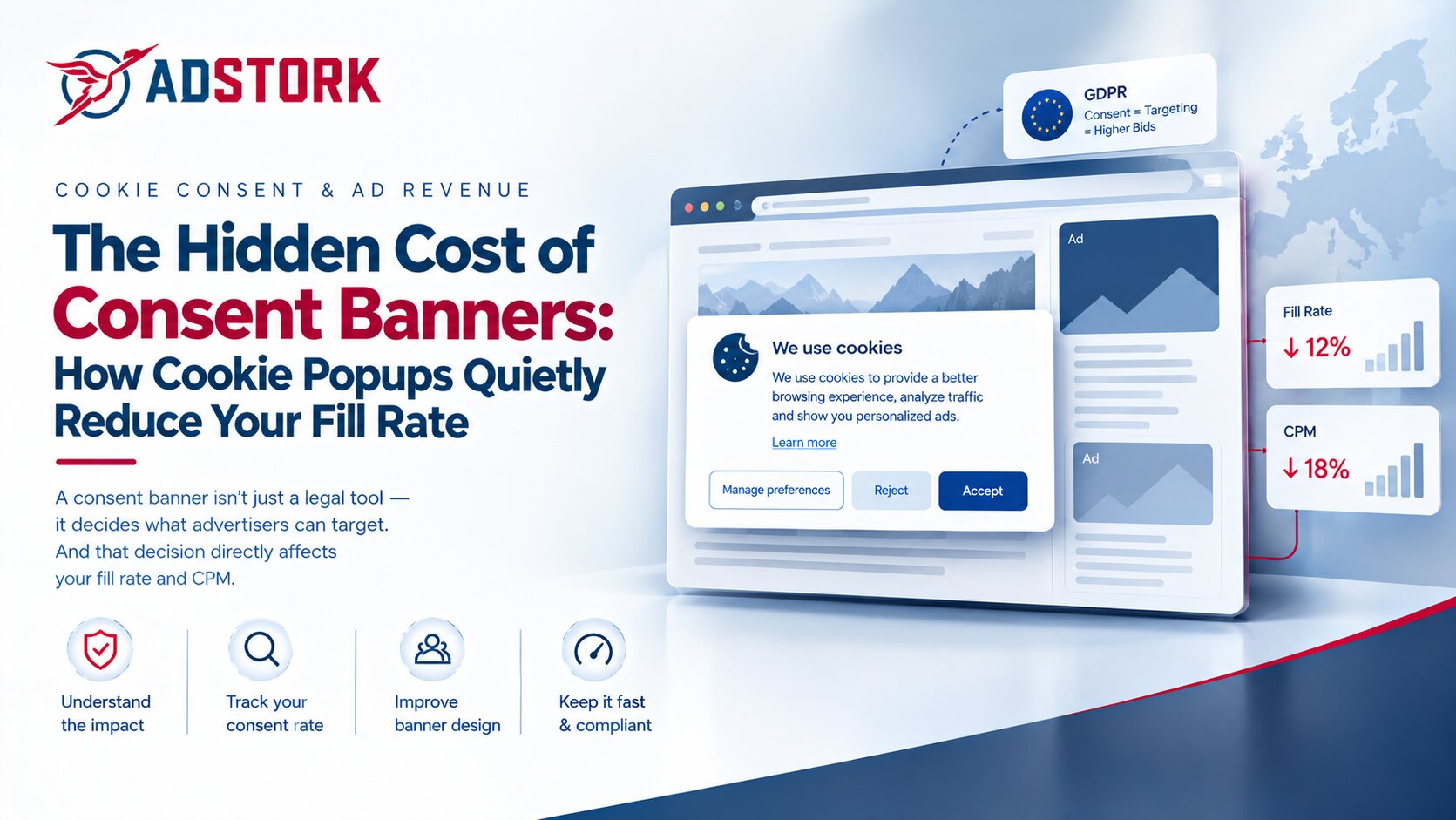
  • 04 Sep, 2026
How Do Publishers Know When Their Current Ad Network Has Reached Its Limit?

Your traffic is growing. Your content is strong. But your ad revenue has flatlined. You've tweaked placements, tested formats, and adjusted floors—yet nothing moves the needle.This is the quiet signal that your current ad network may have reached its limit.The challenge is that revenue declines rarely look like a crisis in your dashboard. A 10% CPM compression over four weeks looks like normal market volatility. It gets attributed to seasonal slowdowns or advertiser budget cycles. The problem underneath goes unfound.This guide walks you through nine critical signals that indicate your ad network has reached its limit—and how to distinguish temporary noise from structural underperformance.Key TakeawaysRevenue plateaus despite traffic growth are the clearest sign your network has hit its ceiling.Declining eCPM without market explanation signals demand gaps or optimisation failures.Fill rate drops from 78% to 64% over weeks can look like normal variance—until it doesn't.Technical issues like misconfigured floors or unsynced auctions can silently drain revenue.The "honeymoon phase" after switching is temporary—judge performance only after 60 days of data.If your network hasn't adapted to AI-driven traffic shifts or cookie deprecation, it's falling behind.1. Revenue Has Plateaued Despite Traffic GrowthThis is the most obvious signal. Your traffic is increasing—but your ad revenue is flat or declining.When audience growth no longer translates to revenue growth, your monetisation is not scaling with your traffic. Your network may be struggling to attract incremental demand for your growing inventory, or it may be optimising for metrics that don't capture the full value of your audience.As one publisher noted, "Display CPMs are flatlining, and the buy side is consolidating around fewer, larger deals." If your network isn't accessing those premium deals, your revenue will stagnate even as your traffic grows.What to check: Compare your traffic growth rate against your revenue growth rate over the last 6-12 months. If the gap is widening, your network is not capturing value from your incremental audience.2. CPM and eCPM Are Declining Without Market ExplanationIf your eCPMs are falling while industry benchmarks remain stable, your current platform likely has demand gaps or optimisation issues that newer competitors have already solved.Programmatic revenue depends on the quality and accuracy of the signals your inventory sends to advertisers. When those signals degrade—because of misconfigured tags, broken audience segmentation, or outdated technology—your inventory looks less valuable than it actually is.The result: CPMs drop. Fill rates decline. And your revenue dashboard shows numbers that look normal because they are only slightly lower than last week, and slightly lower the week before that.What to check: Export 60-90 days of eCPM and CPM data. Compare against industry benchmarks. If your numbers are declining while benchmarks are stable, your network is underperforming.3. Fill Rate Is Dropping ConsistentlyEvery ad request that doesn't get filled is lost revenue. A fill rate decline from 78% to 64% over three weeks might look like normal programmatic variance—until it doesn't.Low fill rates create a vicious cycle: advertisers and ad networks use publisher fill rate data as a signal of inventory reliability. Publishers with consistently low fill rates may receive fewer competitive bids, further reducing both fill rate and eCPM.If traffic quality is questionable, DSPs and their partners may avoid bidding on that inventory. For a publisher with high traffic volume, poor quality will mean many unsold impressions.What to check: Track fill rate by geography, device, and format. If specific segments are underperforming, your network may lack demand in those areas.4. Bid Density Is DecliningBid density—the number of bids per auction—is a leading indicator of advertiser interest. When bid density drops, it means fewer buyers are competing for your inventory.Server-side header bidding can reduce browser-side latency, but in some cases, it can lead to lower bid density or CPMs. Lower match rates or lower signal quality can reduce buyer competition and put downward pressure on CPMs.When auctions are not synchronised properly, good bids never reach the final auction. A small technical detail, but a big impact on fill rate and auction pressure.What to check: Review your header bidding wrapper and Google Ad Manager alignment. If valid demand never reaches the final auction, fill rate drops and impressions go unserved.5. Technical Issues Are Going UnresolvedSimple configuration gaps can quietly cost publishers significant revenue. When ad networks fail to address technical issues, revenue leaks compound over time.Common technical issues include misconfigured floor prices that reduce fill rates, unsynchronised auctions that prevent good bids from reaching the final auction, and consent signal loss that reduces eligible demand.If your network isn't proactively identifying and fixing these issues, your revenue is silently leaking.What to check: Audit your ad stack configuration. Are floor prices optimised dynamically? Are your wrapper and ad server synchronised? Are you losing consent signals?6. Support Has Become UnresponsiveWhen your ad network's support team stops providing meaningful optimisation guidance, it's a signal that your account is no longer a priority.The best ad networks provide dedicated account management, proactive optimisation recommendations, and quick resolution of technical issues. If you're getting generic responses or no responses at all, your network has likely moved on to larger accounts.What to check: Review your support interactions over the last 3-6 months. Are you receiving proactive optimisation advice? Are technical issues resolved quickly? Do you have a dedicated account manager?7. The Network Hasn't Adapted to Industry ChangesThe advertising industry is evolving rapidly. In Q2 2026, publisher ad request volumes fell 32% to 37% year over year in the U.S. and 39% to 41% in the U.K. Publisher ad supply on the open web fell by up to 40%.If your network hasn't adapted to these changes—by embracing server-side header bidding, supporting new formats like CTV, or optimising for first-party data—it's falling behind.Networks that don't invest in AI-driven optimisation, transparent reporting, or diversified demand sources will struggle to maintain performance as the market shifts.What to check: Does your network support header bidding? Do they offer dynamic floor pricing? Are they investing in first-party data solutions? Have they adapted to cookie deprecation?8. The Honeymoon Phase Has Faded Without Sustained ImprovementWhen publishers switch ad networks, they often experience a significant RPM jump in week one, followed by a painful dip around day 30. This is the technical reality of how programmatic systems learn, sync, and recalibrate.Short-term spikes after switching are usually temporary, as DSPs, cookie syncing, and price floors need 30 to 60 days to settle into a true baseline.If your current network delivered an initial boost but performance has since stabilised below expectations, it may have reached its limit for your traffic profile.What to check: Judge a new stack only after 60 days of data. If performance hasn't improved beyond your previous network's baseline, the new network may not be a significant upgrade.9. Reporting Has Become OpaqueAd networks should provide dashboards accessible to every publisher to track performance in real time. This helps you analyze their performance and identify data discrepancies.If your network's reporting is opaque—lacking granular data by geography, device, format, and placement—you cannot optimise effectively. You're operating in the dark.The best networks provide transparent, real-time reporting that shows you exactly what is happening with your inventory. If yours doesn't, it's time to reconsider.What to check: Can you see fill rate, eCPM, and revenue by geography, device, and format? Can you export data for custom analysis? Do you have access to bid-level data?If you're seeing these signals, it may be time to evaluate whether your current network can still deliver for your growing business. Adstork provides transparent reporting, multiple demand sources, and dedicated support to help publishers scale their revenue. Explore Adstork's publisher solutions and see how a modern ad network can help you break through your revenue ceiling.Comparison Table: Healthy Network vs. Network at Its LimitA quick reference guide to distinguish a healthy ad network from one that has reached its limit.SignalHealthy NetworkNetwork at Its LimitRevenue vs. TrafficRevenue grows with trafficRevenue plateaus despite traffic growtheCPM TrendStable or growing vs. benchmarksDeclining without market explanationFill RateConsistent (80%+)Dropping consistentlyBid DensityMultiple competitive bidsDeclining competitionTechnical SupportProactive, responsive, knowledgeableUnresponsive, generic, slowIndustry AdaptationEmbracing new formats, AI, first-party dataStagnant, outdated technologyReportingTransparent, granular, real-timeOpaque, limited, delayedIndustry Insight: The Hidden Cost of Staying Too LongThe cost of staying with a network that has reached its limit is not always visible in your dashboard. It's a slow, silent drain on your revenue.At the scale of programmatic advertising, even a silent 10% compression in effective CPMs across a publisher's inventory translates to significant annual revenue loss. The problem is that a 10% CPM compression over four weeks rarely looks like a crisis in a dashboard.Many publishers also know that CPMs fluctuate, fill rates vary, and some revenue loss is just part of how the ecosystem works. What far fewer publishers know is how much of that lost revenue is not a market problem—it is a data or partner problem.One publisher noted that sales teams would sometimes overpromise on impression volume, leaving ops teams scrambling to deliver campaigns when the actual site traffic falls short. If your network is overpromising and underdelivering, it has reached its limit.What to Do Next: A 4-Step Action PlanIf you're seeing multiple signals that your network has reached its limit, here is a structured approach to evaluating your options.Step 1: Audit your current setup. Export 60-90 days of data from your existing dashboard. Include RPM by geography, fill rate, eCPM, and revenue per session.Step 2: Identify the gaps. Compare your performance against industry benchmarks. Where are you underperforming? Is it fill rate in certain geos? eCPM on mobile? Support responsiveness?Step 3: Test alternatives. Partition a portion of traffic towards new ad configurations before switching your site over wholesale. Run a controlled test with a new network on a limited segment.Step 4: Evaluate after 60 days. Short-term spikes after switching are temporary. Judge a new stack only after 60 days of data. Compare effective RPM, fill rate, and revenue per session—not just headline CPM.Your ad network has a limit. The question is whether you've reached it—and whether you'll recognise the signals before revenue loss compounds.The nine signals in this guide—revenue plateaus, declining eCPM, dropping fill rates, weakening bid density, unresolved technical issues, unresponsive support, failure to adapt, faded honeymoon phases, and opaque reporting—are your early warning system.If you're seeing multiple signals, it's time to evaluate your options. The cost of staying too long is not always visible in your dashboard—but it's real.Adstork helps publishers break through revenue ceilings with transparent reporting, multiple premium demand sources, and dedicated support. Sign up for a free Adstork publisher account and see what a modern ad network can do for your revenue.Your immediate action plan: Audit your current performance against the nine signals. Identify your biggest gaps. Research 2-3 alternative networks that address those gaps. Run a controlled test on a limited segment. Evaluate after 60 days. Make a data-driven decision.FAQsHow do I know if my ad network has reached its limit? Look for nine signals: revenue plateaus despite traffic growth, declining eCPM without market explanation, dropping fill rates, weakening bid density, unresolved technical issues, unresponsive support, failure to adapt to industry changes, faded honeymoon phase without sustained improvement, and opaque reporting.What is a normal eCPM fluctuation vs. a sign of network failure? A 10% CPM compression over four weeks rarely looks like a crisis in a dashboard. If your eCPMs are declining while industry benchmarks are stable, your network likely has demand gaps or optimisation issues.How long should I wait before switching ad networks? If you've recently switched, judge performance only after 60 days of data. If you've been with a network for over a year and are seeing multiple decline signals, start evaluating alternatives immediately.Should I switch networks entirely or add a second one? Many successful publishers use multiple networks in a header bidding setup. Adding a network can introduce competition without disrupting existing revenue. Test before you switch.What metrics should I track to monitor network performance? Track revenue per session, fill rate by geography and device, eCPM, bid density, and viewability. Don't rely on headline CPM alone—it can be misleading.Can technical issues make a network look like it's underperforming? Yes. Simple configuration gaps can quietly cost publishers significant revenue. Misconfigured floor prices, unsynchronised auctions, and consent signal loss can all reduce fill rates and eCPM.

Read more
  • 01 Sep, 2026
What Does an Ad Network Actually Do for a Publisher?

You have heard the term "ad network." You know it has something to do with making money from your website. But what does it actually do?Think of an ad network as the bridge between two worlds: publishers who have ad space to sell and advertisers who want to buy it. Without an ad network, you would need to find advertisers yourself, negotiate prices individually, handle the technical delivery of ads, and chase payments—all while trying to run your website.An ad network handles all of that for you. It takes your empty ad space, fills it with paying ads, and sends you revenue. Everything else—technology, relationships, reporting, payments; happens behind the scenes so you can focus on creating content and growing your audience.This guide walks you through exactly what an ad network does, step by step, from the moment a user visits your site to the moment you receive your payout.Key TakeawaysAn ad network is the intermediary that connects publishers with advertisers.It handles everything: filling ad space, running auctions, delivering ads, tracking performance, and paying you.The process follows a clear path: ad request → auction → ad delivery → reporting → revenue.Ad networks save you from finding advertisers, negotiating prices, and chasing payments.The right ad network provides technology, demand, transparency, and support—all in one platform.The Ad Network Journey: Step by StepThe journey from a user visiting your site to you earning revenue follows a clear, logical path. Here is exactly what happens.1. Your Website Sends an Ad RequestWhen a user visits your website, your ad code (provided by the ad network) sends an ad request to the network's servers. This request contains information about the user and the page.The request includes contextual signals—the page topic, keywords, and content category. Geographic data shows the user's location. Device information identifies whether they are on desktop, mobile, or tablet. User behavior signals may include engagement patterns and return frequency.This request happens in milliseconds. The user does not see it. They only see the ad that eventually loads.2. The Ad Network Connects to Advertiser DemandThe ad network takes your request and sends it to multiple advertisers, demand sources, and exchanges simultaneously. This is where the network's relationships matter.Ad networks with strong demand sources premium SSPs, direct advertisers, and programmatic exchanges can connect your inventory to the right buyers. Networks with weak demand sources will struggle to fill your inventory at good prices.The goal is to expose your inventory to as many potential buyers as possible. More buyers mean more competition, which means higher CPMs.3. The Auction or Matching Process BeginsThis is where the magic happens. The ad network runs an auction where multiple advertisers bid on your inventory in real time.Each advertiser evaluates the request based on their campaign goals. Do they want to reach users in this geographic location? Is the content context relevant to their brand? Is the user likely to engage?Advertisers submit bids based on the value they assign to the impression. The highest bid wins—assuming it meets your floor price. This is called real-time bidding (RTB), and it happens in milliseconds.Some networks use header bidding, where multiple demand sources bid simultaneously. Others use a waterfall, where partners are called in a fixed order. Header bidding typically generates higher CPMs because more competition drives prices up.4. The Creative Is DeliveredOnce the winning bid is selected, the ad network delivers the ad creative to your website. The user sees the ad in the designated space on your page.The ad creative might be a display banner, a native ad, a video, a popunder, or a push notification. The format determines how the ad is rendered and how users interact with it.This is the only part of the process the user sees—the ad itself. Everything else happens behind the scenes.Neuromarketing insight: users are unaware of the auction. They simply see an ad that feels relevant to their context. This relevance reduces cognitive resistance and increases engagement. The ad network's ability to match the right ad to the right user in real time is what makes programmatic advertising effective.5. Performance Is TrackedThe ad network tracks every impression, click, and conversion. This data is recorded in real time and made available to you through the network's reporting dashboard.Key metrics include impressions (how many times ads were displayed), clicks (how many times users clicked), CTR (click-through rate), CPM (cost per mille), eCPM (effective CPM), fill rate (percentage of requests filled), and revenue (total earnings).Transparent reporting is essential for optimisation. Without it, you cannot know what is working and what is not. The best ad networks provide granular data segmented by country, device, format, and placement.6. You Review Your EarningsYour earnings dashboard shows your revenue in real time. You can see how much you have earned today, this week, and this month.The dashboard also shows which formats, geos, and placements are performing best. This data helps you optimize your monetization strategy.Most ad networks provide regular payment cycles, typically monthly or weekly. You receive your earnings based on the network's payment terms and your selected payment method.What a Good Ad Network ProvidesNot all ad networks are created equal. A good ad network provides more than just ad tags. Here is what to look for.Demand access. Premium demand sources that pay well and fill consistently. Direct advertiser relationships and programmatic exchanges. Global coverage that matches your traffic profile.Ad technology. Real-time bidding and header bidding capabilities. Multiple ad formats including display, native, video, and popunder. Ad quality controls and brand safety features. Fraud prevention and invalid traffic filtering.Transparency. Granular reporting segmented by country, device, format, and placement. Real-time data access. Clear payment terms and fee disclosure. No hidden charges.Support. Dedicated account management. Responsive support team. Optimisation guidance. Technical assistance for integration.Payment reliability. Consistent payment cycles. Multiple payment options. Low minimum payout thresholds. No payment delays.Industry Insight: The Value Ad Networks ProvideAd networks have evolved significantly. Modern networks provide value far beyond basic ad serving.AI-powered optimisation is becoming standard. Networks use machine learning to optimise floor prices, demand routing, and ad placement in real time.Multi-format support is essential. Publishers want one network that can handle display, native, video, and popunder formats. Managing multiple networks for different formats is inefficient.Global demand is increasingly important. Ad networks with strong international demand help publishers monetise traffic from all regions.Transparency is now expected. Publishers demand to know where their revenue comes from, who is buying their inventory, and what fees are being applied.The network that provides the best combination of demand, technology, transparency, and support will earn long-term publisher loyalty.At its core, an ad network handles the technology, demand, and payments so you can focus on what matters—creating content and growing your audience. Adstork provides all of this with instant approval, global demand, transparent reporting, and dedicated support. Sign up for a free Adstork publisher account and see how easy monetisation can be.Comparison Table: Ad Network vs. No Ad NetworkHere is what your monetisation experience looks like with and without an ad network.ActivityWithout an Ad NetworkWith an Ad NetworkFinding AdvertisersYou need to find and negotiate with each advertiser individuallyNetwork connects you to hundreds of advertisers automaticallyPricingFixed rates, limited competitionReal-time auctions, competitive bidsAd DeliveryYou need to host and serve ads yourselfNetwork handles delivery and renderingReportingManual tracking, or none at allAutomated, real-time dashboardsPayment CollectionYou chase payments from each advertiserNetwork collects and pays youTime InvestmentSignificant—sales, negotiation, technicalMinimal—focus on contentOptimisationLimited data, manual adjustmentsAI-powered, data-drivenFuture Outlook: The Evolving Role of Ad NetworksThe role of ad networks is evolving. Several trends are reshaping what publishers should expect from their networks.AI and automation are becoming standard. Networks increasingly use machine learning to optimise yield, detect fraud, and improve ad targeting. Publishers benefit from higher performance without manual effort.First-party data integration is growing. Networks that help publishers collect and activate first-party data will provide more value in the post-cookie era.Transparency requirements are increasing. Publishers demand visibility into demand sources, fees, and auction dynamics. Networks that resist transparency will lose publishers.Multi-format support is becoming standard. Publishers want one partner that can handle all formats—not separate networks for display, native, and video.The future belongs to ad networks that provide comprehensive solutions—technology, demand, transparency, and support—in a single, easy-to-use platform.An ad network is the bridge between your website and advertisers. It handles everything from filling your ad space to running auctions, delivering ads, tracking performance, and paying you.Without an ad network, you would need to find advertisers yourself, negotiate prices individually, handle technical delivery, and chase payments. With an ad network, you focus on creating content and growing your audience—the network handles the rest.Adstork provides everything a publisher needs: instant approval, global demand, multiple formats, transparent reporting, and dedicated support. All in one platform. Sign up for a free Adstork publisher account and see what a modern ad network can do for you.FAQsWhat does an ad network do for a publisher? An ad network connects your website's ad inventory to advertisers, runs real-time auctions to determine the highest bid, delivers the ad to your user, tracks performance, and handles payments. It does everything so you do not have to find advertisers or manage ad delivery yourself.How do ad networks make money? Ad networks typically take a percentage of the ad revenue as a fee. The exact percentage varies by network. Some networks also charge advertisers a markup on media purchases. Transparent networks disclose their fee structure clearly.Do I need an ad network to make money from ads? You could theoretically find advertisers directly and sell ad space yourself. But this requires significant time and effort—finding advertisers, negotiating prices, managing ad delivery, and chasing payments. Most publishers use ad networks because they handle everything efficiently.What is the difference between an ad network and a DSP? An ad network connects publishers with demand sources. A DSP (demand-side platform) is used by advertisers to buy inventory across multiple networks and exchanges. Publishers work with ad networks; advertisers work with DSPs.What is real-time bidding? Real-time bidding (RTB) is the process where advertisers bid on each impression in milliseconds. When a user visits your site, an auction occurs, and the highest bidder's ad is delivered. RTB ensures you capture the true market value of your inventory.How do I choose an ad network? Evaluate networks based on approval speed, traffic requirements, supported formats, GEO coverage, demand quality, reporting transparency, payment terms, support quality, and account management. Use the Publisher's Checklist to compare your options.

Read more
  • 01 Sep, 2026
What Happens Between an Ad Request and an Ad Appearing?

You visit a webpage. An ad appears. It feels instantaneous.But behind that blink-of-an-eye moment, a complex journey unfolds. Multiple systems communicate, auctions run, and decisions are made—all in under 100 milliseconds. The process involves publishers, ad exchanges, supply-side platforms (SSPs), demand-side platforms (DSPs), and advertisers, each playing a specific role in delivering that ad to your screen.This guide breaks down exactly what happens between an ad request and an ad appearing—step by step.Key TakeawaysThe entire ad request-to-delivery process takes under 100 milliseconds.OpenRTB is the standard protocol that enables different ad tech systems to communicate.SSPs connect publishers to exchanges; DSPs connect advertisers to exchanges.Header bidding lets multiple demand sources bid simultaneously, creating competition.Win and loss notifications help advertisers optimise future bidding strategies.The 100-Millisecond Journey: Step by StepWhat follows is the typical path an ad request takes in a programmatic environment—from the moment a user loads a page to the moment an ad appears. The specific order can vary slightly depending on the technology stack and whether header bidding is involved.1. A User Visits a WebpageThe journey begins when a user navigates to a publisher's website. The page starts loading, and the browser begins rendering the content. As part of this process, the page's ad tags are triggered.The ad tags are JavaScript snippets placed by the publisher or their ad server. When the browser loads the page, these tags execute and initiate the ad request sequence. For header bidding setups, this happens via a header bidding wrapper like Prebid.js, which orchestrates the entire process.2. The Ad Request Is CreatedThe ad tag generates an ad request—a message containing everything the system needs to know to find the right ad for this specific impression.The request includes site or app information—name, domain, category, and content details like genre, keywords, and content rating. It contains device information—type, operating system, IP address, and identifier for advertising. User data is included—anonymised identifiers, consented data, and universal IDs like UID2 or RampID. Impression details describe ad size, format, and the minimum price required (floor). The supply chain shows the path from the original media owner to the final buyer.All of this information is packaged using the OpenRTB protocol—the standard language of ad tech. The request is formatted in JSON, making it readable and interpretable by all participants in the ecosystem.Neuromarketing insight: the more detailed the ad request, the more confident advertisers can be in targeting the right user. Confidence triggers higher bids because advertisers perceive lower risk and higher relevance. This is why publishers who provide clear content and audience signals consistently earn more.3. The SSP Sends the Request to the ExchangeThe ad request is sent to a supply-side platform (SSP). The SSP's job is to help publishers sell their inventory efficiently across multiple exchanges. In a header bidding setup, the request is sent to multiple SSPs simultaneously.The SSP applies its own business logic and data insights, then forwards the request to an ad exchange. Often, the SSP and ad exchange are the same organisation.The exchange is the marketplace where publishers and advertisers meet. It is the engine that powers the real-time auction.4. The Exchange Runs the AuctionThe exchange receives the request and broadcasts it to multiple demand-side platforms (DSPs) that represent advertisers. This is where the real-time auction begins.Each DSP evaluates the request against its advertisers' campaigns. It checks whether the impression matches targeting criteria—geography, device, content relevance, audience segments, and campaign goals. The DSP's algorithms determine the value of the impression and generate a bid.This entire evaluation happens in milliseconds. The DSP must decide whether to bid and at what price before the auction times out.The exchange then determines the winner. In a first-price auction, the highest bid wins and the winning bidder pays their bid amount. Other auction types exist, but first-price is becoming the industry standard for transparency.5. The Winning Ad Is ReturnedThe exchange sends the winning bid back to the SSP, which passes it back to the publisher's ad server. The response includes the winning bid price, the ad creative, or a URL where the creative can be retrieved.If the winning bid did not include the creative directly, the publisher's ad server retrieves it from the advertiser's ad server. The ad server makes the final decision, which may also consider direct sold campaigns that take priority over programmatic winners.The selected ad is then sent to the browser for rendering.6. The Ad Is Rendered to the UserThe ad creative appears on the page. The user sees the ad—often without any awareness of the complex auction that just occurred. This is the only part of the process the user experiences directly.Rendering itself involves painting the creative on the screen, whether it is a display banner, video, native ad, or another format. However, rendering does not always mean viewability—the user may not actually see the ad depending on placement and scrolling behaviour.7. Performance Is Tracked and VerifiedAfter the ad is delivered, multiple systems collect data. Beacons fire, notifying participants that the ad rendered and transactions should be recorded.Win notifications confirm the auction win to the winning bidder. The system notifies the winner through a win notification URL (NURL), which includes the clearing price and settlement details. Loss notifications inform losing bidders why they did not win, helping them optimise future bidding strategies. The loss reasons follow standardised codes, like budget depleted or targeting mismatch.Billing notices indicate that spending should be applied, informing the advertiser that an impression has been served and billed. This enables the advertiser to manage campaign delivery and budget pacing.8. Records Are ReconciledThe journey does not end with the ad render. Both selling platforms and buying platforms log impressions, fees, clearing prices, billable prices, and telemetry in ledger systems.Most companies conduct monthly reconciliation, matching numbers between systems and managing any discrepancies. This ensures accurate billing and payment for all parties involved.The Role of Header BiddingWhile the process described above works in any programmatic environment, header bidding has become the preferred approach for many publishers.In traditional waterfall setups, demand sources were called one at a time in a fixed order. Header bidding sends requests to multiple demand sources simultaneously. This creates a more competitive, transparent auction where all bidders compete on equal footing.The result is higher CPMs, better fill rates, and greater control for publishers.The process happens in two phases. In the pre-bid phase, the header bidding script sends bid requests to demand sources, collects bids, and runs an auction to determine the highest bid. In the post-bid phase, the winning bid is sent to the ad server, which updates analytics and displays the ad.Industry Insight: The OpenRTB ProtocolAt the heart of this entire process is OpenRTB, the industry standard maintained by the Interactive Advertising Bureau (IAB).OpenRTB defines the communication protocols between advertising buyers and sellers in programmatic ecosystems. It provides a standardised way to express advertising-related information, allowing media owners, marketers, and others in the programmatic supply chain to communicate during an auction.Without OpenRTB, every system would need custom integrations with every other system. The protocol enables interoperability at scale, making the 100-millisecond journey possible.The 2026 Programmatic Auction Definitions document from IAB Tech Lab continues to build on this foundation, establishing standardised vocabulary and technical explanations for how digital advertising auctions operate. It defines 12 critical roles and a 12-step workflow that includes inventory setup, bid solicitation, auction execution, and transaction recording.The 100-millisecond journey from ad request to ad appearing is a testament to the complexity and efficiency of modern ad tech. Adstork handles this entire process through a unified header bidding platform, connecting your inventory to multiple premium demand sources simultaneously. Every step—from the moment a user visits your site to the moment an ad renders—happens with transparency and speed. Sign up for a free Adstork publisher account and see how efficient ad delivery can transform your revenue.Comparison Table: The Ad Request Journey at a GlanceA quick reference guide to the 8-step journey from ad request to ad appearing.StepWhat HappensKey Players1. User visits pageBrowser loads publisher's site; ad tags are triggeredUser, Publisher, Browser2. Ad request createdRequest includes site, content, device, user data—formatted in OpenRTBAd Server, Header Bidding Wrapper3. SSP sends to exchangeSSP applies business logic, forwards request to ad exchangeSSP, Ad Exchange4. Auction runsExchange broadcasts request to DSPs; bids are submitted in real timeAd Exchange, DSPs, Advertisers5. Winning ad returnedHighest bid is selected; ad server retrieves creativeAd Exchange, SSP, Ad Server6. Ad renderedCreative appears on the page for the user to seeBrowser, Ad Server7. Performance trackedBeacons fire; win/loss/billing notifications are sentExchange, DSP, SSP8. Records reconciledTransactions are logged, matched, and reconciled monthlyAll partiesFuture Outlook: The Evolution of Ad DeliveryThe ad request-to-delivery process continues to evolve. Several trends are shaping how ads will be served in the coming years.AI-powered optimisation is becoming more sophisticated. Machine learning models analyse thousands of signals in milliseconds, predicting which advertisers will perform best on which inventory and adjusting bids in real time.Server-side header bidding is reducing latency. Moving the auction from the browser to the server improves page speed and reduces timeout rates, allowing more bidders to participate without performance penalties.Unified measurement is becoming the standard. The industry is moving toward consistent vocabulary and technical explanations for how digital advertising auctions operate, enabling better optimisation for all participants.Privacy-first signals are replacing cookies. The ad request will increasingly rely on first-party data and contextual signals, rather than third-party identifiers. Publishers who provide clear, consensual audience signals will command higher bids.The 100-millisecond journey will only get faster and smarter. Publishers who understand the process and optimise for it will capture more value from every impression.The journey from ad request to ad appearing is a complex, lightning-fast process involving multiple systems, real-time auctions, and thousands of data points—all in under 100 milliseconds.Understanding this journey helps you appreciate the technology that powers your revenue. Every step—from the initial request to the final render—is designed to maximise the value of your inventory while delivering a seamless user experience.The right ad network handles this entire process for you, connecting your inventory to premium demand sources through header bidding, running transparent auctions, and delivering the highest-paying ads to your users. Adstork does all of this through a unified platform, with instant approval and no minimum traffic requirements. Sign up for a free Adstork publisher account and see how efficient ad delivery can transform your revenue.Your immediate action plan: Review your current ad setup. Are you using header bidding or waterfall? Can you see win and loss data from your demand sources? If your network is not providing transparency into the ad delivery process, consider testing one that does. Adstork's reporting shows you exactly what is happening at each step of the journey.FAQsHow long does it take for an ad request to become an ad on the page? The entire process from ad request to ad delivery typically takes under 100 milliseconds. This includes sending the request, running the auction, selecting the winner, and rendering the ad.What is OpenRTB and why does it matter? OpenRTB is the industry standard protocol that enables different ad tech systems to communicate during an auction. It standardises how ad requests and responses are formatted, allowing publishers, exchanges, SSPs, and DSPs to work together seamlessly.What is the difference between an SSP and a DSP? An SSP (supply-side platform) helps publishers sell their inventory across multiple exchanges. A DSP (demand-side platform) helps advertisers buy inventory across multiple exchanges. The exchange sits between them, running the auction that brings buyers and sellers together.What happens if no one bids on my inventory? If no advertiser bids or no bid meets your floor price, the request goes unfilled. Many networks use waterfall or passback chains to capture revenue from secondary demand sources.What are win and loss notifications? Win notifications confirm an auction win to the winning bidder, including the clearing price. Loss notifications inform losing bidders why they did not win, helping them optimise future bidding strategies.How does header bidding fit into this process? Header bidding sends ad requests to multiple demand sources simultaneously, rather than sequentially. This creates more competition and transparency, often resulting in higher CPMs and better fill rates for publishers.

Read more
  • 02 Sep, 2026
What Makes a Publisher Valuable to an Ad Network?

Two publishers have similar traffic volumes. One earns $8 CPM. The other earns $2 CPM. Same traffic. Different revenue.Why?The answer lies in how advertisers evaluate inventory. They do not buy traffic. They buy outcomes. They buy the likelihood that an impression will drive engagement, brand recall, or conversion. And they are willing to pay dramatically different amounts for different impressions based on signals that indicate value.This guide explains what makes a publisher valuable to advertisers—from the buy-side perspective. Understanding these factors will help you recognise the true value of your inventory and position yourself to capture premium CPMs.Key TakeawaysAdvertisers don't buy traffic—they buy outcomes, engagement, and audience quality.Eight factors determine inventory value: audience, geography, niche, engagement, consistency, brand safety, placement, and traffic quality.Publishers scoring high across all factors command CPMs 5-10x higher than those with poor scores.Premium inventory attracts more demand, which creates competition that drives prices higher.Your inventory may be more valuable than you think—the question is whether your monetization setup captures that value.The Advertiser's Question: "Can I Access My Target Audience?"Before an advertiser bids on your inventory, they ask a fundamental question: "Can I access my target audience here?"Advertisers use sophisticated tools to filter publisher inventory. They leverage first-party data, second-party publisher data, and third-party vendor data to determine which impressions make strategic sense for their campaigns. They forecast reach against their target segments and decide which publishers offer the greatest penetration.The publishers that answer "yes" to this question most convincingly capture the highest bids.The 8 Factors That Determine Inventory ValueAdvertisers evaluate inventory across eight dimensions. Each factor signals something about the likelihood that an impression will deliver value.1. Audience QualityAudience quality is the foundation. Advertisers want to reach real, engaged humans with purchasing power and influence.Signals of high audience quality include: loyalty (returning visitors who engage repeatedly), purchasing power (affluent, educated demographics), trust (strong brand relationships and authority), and influence (decision-makers, opinion leaders).Signals of low audience quality include: passive consumption (bouncing quickly, superficial engagement), limited purchasing power (low-income demographics), no brand trust, and no influence.Advertisers use sophisticated audience analysis tools to evaluate these signals. High audience quality translates directly to higher CPMs.2. Geographic LocationGeography is the largest structural factor in advertiser value. Tier-1 countries command dramatically higher CPMs than tier-2 or tier-3 markets.Traffic from the United States, United Kingdom, Canada, Australia, and Western Europe attracts stronger advertiser budgets and more competition. Tier-2 and tier-3 regions have lower demand and lower CPMs.The difference can be 3-5x. A publisher with US traffic earning $6 CPM might see the same traffic from India earning $1.50 CPM. The volume might be similar. The value is not.3. Niche RelevanceNot all content categories are equal. Finance, technology, health, and business topics command much higher CPMs than lifestyle, entertainment, or general content.Contextual inventory is often valued more highly than behavioral activity, because advertisers can commit to targeting within a specific channel. A finance site with 10,000 visitors can earn more than a general lifestyle site with 50,000 visitors because the advertiser budgets are larger and the audience precision is higher.For niche publishers, the value is not in volume—it is in precision.4. Engagement MetricsEngagement signals how deeply visitors connect with your content. Advertisers pay more for audiences that are truly engaged.High engagement means longer session durations (3+ minutes), more pages per visit (3-5 pages), lower bounce rates (below 50%), and return visits. Low engagement means short sessions (under 60 seconds), few pages (1-2), high bounce rates (above 80%), and no return visits.Advertisers can see engagement signals through analytics and behavioral data. High engagement means more attention, more trust, and more likelihood of conversion.5. ConsistencyConsistent, predictable traffic is more valuable than viral spikes. Advertisers want stable audiences they can count on for campaign delivery.A publisher with steady, predictable traffic month over month is more attractive than one with erratic spikes driven by social media or viral content. Consistency signals sustainable audience relationships and reliable delivery.6. Brand SafetyBrand safety is increasingly important to advertisers. They want to appear in safe, reputable environments. Unsafe or questionable inventory is discounted or avoided.Brand safety signals include: clean, reputable content, clear content classification, active content moderation, and alignment with advertiser values. Concern signals include: controversial content, user-generated content with minimal moderation, low-quality or spammy content, and misinformation.The CPM impact of brand safety concerns can be dramatic. A brand-safe site might earn $8 CPM. A questionable site might earn $2-3 CPM. The difference is 3-4x.7. Placement QualityWhere an ad appears on the page affects its value. Above-the-fold placements with high viewability command premium CPMs. Below-the-fold placements with low viewability are discounted.Advertisers evaluate ad density, placement viewability, and the overall ad environment. Publishers with clean, well-placed ads attract higher bids than those with cluttered, low-viewability placements.8. Traffic QualityTraffic quality is the foundation of advertiser confidence. Clean, verified traffic from legitimate sources attracts strong demand. Suspicious or low-quality traffic is filtered or discounted.Signals of high traffic quality include: organic search and direct navigation, clean referral sources, genuine engagement patterns, and consistent user behavior. Signals of low traffic quality include: incentivized traffic, bot-heavy patterns, suspicious referrals, and sudden unexplained spikes.Advertisers use sophisticated fraud detection tools to filter low-quality traffic. Clean traffic sources command premium CPMs. Questionable sources are discounted or blocked entirely.Industry Insight: The Value of Premium InventoryThe gap between premium and commoditized inventory is widening. Publishers who clearly communicate why their content and audience experiences are different can protect, and even grow, their yield.Premium publishers have a unique advantage: they can deliver storytelling environments that naturally drive higher attention and recall. But they need to prove it. Transparency around delivery and ad placement helps buyers see performance differences in black and white, giving them reason to pay a premium.One major publisher using signal enrichment tools saw a 57% increase in bid response rate, which typically correlates with increased revenue for those ad opportunities. Even incremental improvements in data transparency can translate directly into higher CPMs.As one industry observer notes, when premium impressions are presented with extensive metadata describing audience characteristics, they are inherently worth more and will attract more buyers, driving up the price.Understanding your site's value to advertisers is the first step to capturing it. Adstork provides transparent reporting that shows you exactly how advertisers perceive your inventory—audience quality, engagement, viewability, and more. You can see where you score well and where you need improvement. Get a free publisher valuation and discover what your inventory is really worth to advertisers.Comparison Table: High-Value vs. Low-Value Publisher InventoryA side-by-side comparison of high-value and low-value publisher inventory across the eight factors.FactorHigh-Value PublisherLow-Value PublisherAudience QualityAffluent, loyal, decision-makersLow income, passive, disengagedGeographyUS, UK, Canada, Western EuropeTier-2 and tier-3 countriesNicheFinance, tech, health, businessGeneral, lifestyle, entertainmentEngagement3+ min sessions, low bounce, return visitsUnder 1 min sessions, high bounce, one-timeConsistencyStable, predictable trafficErratic, spike-drivenBrand SafetyClean, reputable, trustworthyQuestionable, low-qualityPlacement QualityAbove the fold, high viewabilityBelow the fold, low viewabilityTraffic QualityOrganic, direct, clean referralsIncentivised, bot-heavy, suspiciousTypical CPM$8– $18+$1 – $3The Competition Effect: Why Quality Attracts More DemandThe value of inventory is not just about what any single advertiser will pay. It is about how many advertisers compete for it. Competition drives pricing.When multiple buyers actively compete for the same impression, the clearing price rises. Premium inventory attracts more bidders because more advertisers recognise its value. This creates a virtuous cycle: high-quality inventory attracts more demand, which drives higher CPMs, which reinforces the perception of quality.The number of bids matters since more participants increase the chance of higher prices. The quality of those bids is also critical, as not all advertisers value the same users or formats equally.Publishers who create inventory that attracts competing bids capture significantly more revenue than those whose inventory attracts only limited interest.Future Outlook: What Advertisers Will Value in 2026 and BeyondThe factors that determine advertiser value are evolving. Several trends are reshaping what advertisers want from publisher inventory.First-party data is becoming the currency of trust. Publishers who can offer verified, privacy-safe audience segments provide advertisers with confidence and campaign performance that justify premium pricing. As cookie-based targeting erodes, authenticated audience data becomes essential for maintaining CPMs.Contextual signals are returning to prominence. With third-party cookies disappearing, advertisers are increasingly relying on content signals to make bidding decisions. Publishers with clear, well-categorised content will benefit.Brand safety requirements are becoming stricter. Advertisers are demanding more transparency and control. Publishers who cannot demonstrate brand safety will see reduced demand.Attention metrics are emerging as key signals. Advertisers are moving beyond viewability to measure genuine attention and engagement.Publishers who invest in quality across all eight factors will be well-positioned for the future.Advertisers don't buy traffic. They buy audiences, engagement, and outcomes. Understanding what makes your inventory valuable from the advertiser's perspective is the key to unlocking higher CPMs, stronger partnerships, and sustainable revenue growth.The eight factors—audience quality, geography, niche, engagement, consistency, brand safety, placement quality, and traffic quality—determine how advertisers perceive your inventory. If you score high across these factors, your inventory may be more valuable than your current monetization suggests.Adstork works with established publishers to help them capture the full value of their premium inventory. If you operate a quality website with engaged audiences, contact our publisher team for a free valuation of your inventory. Let us show you what your traffic is really worth to advertisers.Your immediate action plan: Audit your site against the eight factors. Where do you score well? Where do you have gaps? Consider how you can improve your weakest factor—whether it is viewability, brand safety, or engagement. Then evaluate whether your current monetization partner is capturing the full value of your premium inventory.FAQsWhat makes a publisher valuable to advertisers? Advertisers value publishers based on eight factors: audience quality (loyalty, purchasing power), geographic location (tier-1 countries command premium CPMs), niche relevance (finance and tech attract higher budgets), engagement metrics (time on site, return visits), consistency (stable, predictable traffic), brand safety (reputable content), placement quality (viewability, ad environment), and traffic quality (clean sources, real users).Why do advertisers pay more for some publisher inventory than others? Advertisers pay more when they believe an impression is more likely to deliver value—whether that is engagement, brand recall, or conversion. High-quality inventory signals lower risk and higher potential return, justifying higher CPMs.Does traffic volume or audience quality matter more to advertisers? Audience quality matters significantly more. A publisher with 10,000 engaged, high-value visitors can out-earn one with 100,000 passive, low-value visitors. Advertisers buy audiences, not traffic counts.How does niche affect advertiser value? Different niches attract different advertiser budgets. Finance, technology, health, and business topics command higher CPMs than general lifestyle or entertainment content. Niche publishers benefit from audience precision and relevance.What is the impact of brand safety on CPM? Brand safety concerns can reduce CPMs by 50% or more. Advertisers use brand safety filters to exclude unsafe inventory. Sites with clean, reputable content command premium rates.How can I increase my site's value to advertisers? Improve each of the eight factors: build higher-quality audiences, attract tier-1 geography traffic, create commercial intent content, increase engagement, ensure consistency, maintain brand safety, optimise ad placement for viewability, and maintain clean traffic sources.

Read more
  • 03 Sep, 2026
How Many Ads Should a Website Have?

How many ads should a website have?It sounds like a simple question. The answer never is.For years, the digital advertising industry operated on a straightforward assumption: more ads equal more revenue. The math was mechanical. Increase ad density, increase impressions, increase earnings. It was not a preference—it was an obligation imposed by the programmatic market itself.But that old math is breaking down. Advertisers are starting to recognise that impressions in less saturated environments have a higher probability of generating real outcomes—sustained attention, brand recall, and conversion propensity. The result? Publishers are discovering that fewer ads can sometimes generate more revenue.This guide walks you through the trade-offs, the data, and the practical decisions behind ad density—so you can find the right balance for your website.Key TakeawaysThere is no single "right" number of ads—it depends on traffic quality, content length, audience engagement, and monetization goals.Reducing ad density by 16-50% can increase CPMs as buyers recognise higher-quality inventory.Ad density and impressions per session are the strongest predictors of revenue performance, not CPM or viewability.Once viewability crosses 80%, chasing more has diminishing returns—optimising ad density and fill rate matters more.Heavy ad tech can significantly degrade page speed—one ad script can weigh 1.6MB, and ad scripts can trigger 300+ network calls during page load.The Old Math: Why Publishers Used to Maximise AdsThe "more is better" logic made sense in a world where all impressions were treated as interchangeable. In the open exchange, a CPM was a CPM, regardless of context, user experience, or ad saturation. Publishers had a clear incentive: serve more impressions. Buyers had an incentive: optimise for short-term signals.This precarious equilibrium held because both sides were partially blind. Publishers could not clearly measure the medium-term impact of their experience decisions. Buyers could not reliably distinguish between an impression that "passed" and one that actually generated attention, recall, or conversion. In this context, reducing ads was almost always a losing decision.But the landscape has shifted. Cookie deprecation, improving measurement, and AI-driven bidding are changing how buyers value inventory.The New Math: Why Fewer Ads Can Mean More RevenueRecent experiments are challenging the old assumption. Raptive, a major ad network, conducted tests reducing ad density by approximately 16% across publisher sites. The result? A significant increase in CPMs.Why? The price increase was not because publishers learned to sell better. It was because buying systems are starting to recognise that impressions in less saturated environments have a higher probability of generating results—sustained attention, brand recall, conversion propensity—that are not always visible in real-time but are reflected in clearing prices.Freestar conducted a similar test. They identified publishers with ad densities over 30%, typically equivalent to 4-5 ads in-view for a desktop user at any given time. After removing 50% of ad units on one site, revenue decreased by just 5% while traffic from their top five sources increased by 28%. Revenue has since surpassed pre-cleanup levels.A Lumen Research study with Mail Metro Media found that cutting a simulated page from 15 ads to five lifted the share of readers who actually viewed an ad from 53% to 78%, with 4.2x higher spontaneous recall and an 8% lift in purchase intent.Neuromarketing insight: when users encounter fewer, higher-quality ads, they process them with less cognitive resistance. A clean, uncluttered environment triggers the fluency heuristic—ads feel more natural, relevant, and less intrusive. This subconscious ease translates directly to better brand recall and higher advertiser willingness to pay.What the 2026 Data Actually ShowsPlaywire analysed aggregated ad performance across thousands of publisher websites—8.8 billion sessions, 28.6 billion pageviews, and 113.6 billion ad impressions. The findings challenge several industry assumptions.Ad density drives everything. Impressions per pageview and impressions per session are the two strongest predictors of revenue performance, outperforming fill rate, viewability, CPM, and session duration by a wide margin. Publishers above median on both metrics earn 17x more per session.Viewability has a ceiling effect. Once you cross 80% viewability, incremental gains do not reliably translate to higher revenue per session. Chasing 95% at the expense of fill rate is not a net positive.Session depth is underappreciated. Pageviews per session correlates with revenue at 0.27; session duration alone correlates at -0.03. Content architecture that moves users from page to page is one of the most underleveraged monetisation levers.The takeaway: content architecture and ad layout decisions are truly monetisation decisions. Treat them that way.The Trade-Offs: Revenue, Experience, and Long-Term ValueEvery ad placement involves trade-offs. More ads can increase short-term revenue. But they can also degrade user experience, reduce viewability, and damage long-term audience trust.Revenue opportunity. More ads mean more chances to earn. If your audience is engaged and your fill rates are high, additional inventory can generate meaningful revenue. But the relationship is not linear. At some point, CPMs soften because buyers recognise lower-quality inventory.Viewability. Ads placed below the fold or in cluttered environments often have lower viewability. Softonic increased viewability by 21% and eCPM by 54% simply by implementing lazy loading—proving that fewer, better-placed ads outperform more, poorly-placed ones.Page speed. Ad tech is often the primary driver of page performance challenges. A single ad script can weigh as much as 1.6MB. Ad scripts can trigger 300+ network calls during page load. External scripts drive up to 70% of Core Web Vitals degradation. Every additional second of load time can cut conversions by up to 20% on mobile.Ad blocker adoption. Users are becoming increasingly savvy and less tolerant of intrusive ads. Poor experiences can drive users to ad blockers, or worse, send them straight to competitor websites.How to Find Your Optimal Ad DensityThere is no single magic number for how many ads a website should have. The right answer depends on your traffic quality, content length, audience engagement, and monetization goals. Here is a framework for finding it.Start with a baseline. Most websites should have somewhere between 10 to 15 placeholders, though longer articles may have more. The number is less important than the placement and testing approach.Run controlled tests. Raptive's approach is instructive: move from instant tests to cohort tests where complete groups of sites are compared over weeks or months. This introduces something that has historically been missing in programmatic—time. Time for buying systems to adjust bids, for results to materialise, and for algorithms to internalise deeper signals than simple CTR.Measure the right metrics. Do not optimise solely for headline CPM or total impressions. Track effective RPM, fill rate, revenue per session, viewability, and user experience metrics like bounce rate and session duration.Monitor the full lifecycle. Reducing ads may cause an immediate drop in revenue. But as advertisers recognise the improved quality, CPMs can rise over time. Freestar saw pageviews and CPMs both increase by 10% within weeks of optimisation.One publisher using aggressive ad refresh found that viewability dropped noticeably because ads were refreshing faster than users were actually engaging. After dialling back the refresh interval and tying it to actual scroll and engagement signals instead of a flat timer, impression volume dropped—but revenue went up, because the impressions left were ones buyers actually valued.Industry Insight: The Supply-Demand ShiftA broader market shift is reshaping the economics of ad density. In Q2 2026, publisher ad request volumes fell 32% to 37% year over year in the U.S. and 39% to 41% in the U.K. Meanwhile, average eCPMs rose about 30% year over year in the U.K. and 7% in the U.S.The programmatic strategy of "infinite supply" has effectively steadily driven CPMs down, and AI-driven traffic declines have now killed the idea that there actually is infinite supply. The opportunity sits with publishers that can surface meaningful signals through first-party, contextual, attention, or other data to show that their impressions meet the quality thresholds the buy side is now actively seeking.Some publishers are now "deliberately shaping supply, cutting ad load and low-value bid requests to protect or increase attention and price."The better response to this shift is to make fewer, better impressions worth more—protecting premium supply, proving quality through data, and moving headline metrics from pageviews to retention and lifetime value.Finding the right ad density requires testing, measurement, and a partner that understands the trade-offs. Adstork provides transparent reporting on fill rate, viewability, CPM, and revenue per session so you can see exactly how your ad density choices affect your bottom line—and optimize for what actually works. Sign up for a free Adstork publisher account and start measuring what matters.Comparison Table: High-Density vs. Optimised-Density PublishersHow publishers at different ad density levels perform across key metrics.MetricHigh-Density PublisherOptimised-Density PublisherAd Density30%+ (4-5 ads in-view)15-20% (2-3 ads in-view)Viewability45-55%70-80%+CPM$2 – $4$5 – $8Total RevenueBaselineFlat or higherUser ExperiencePoor (cluttered)Good (clean)Ad Blocker RateHighLowerLong-Term Audience ValueDecliningGrowingFuture Outlook: The End of the "More Is Better" EraThe old math of digital advertising—more ads equal more revenue—is no longer universal. It works only under certain conditions, and those conditions are disappearing.Advertisers are rewarding quality. As buyers can no longer rely on third-party identifiers, they are forced to trust contextual signals, attention metrics, and aggregated performance data. When you can no longer squeeze the ID, you start looking at the environment—and that is where experience matters.Supply is shrinking. The long-held assumption of infinite inventory is dead. AI-driven traffic declines are reducing ad requests. The remaining impressions are being repriced by supply and demand.Publishers are choosing quality. More publishers are deliberately shaping supply—cutting ad load and low-value bid requests to protect or increase attention and price.For over a decade, the "fewer ads, better experience" argument was a luxury reserved for certain publishers with alternative revenue. Today, under certain conditions, it is becoming an economically defensible strategy—not because the market has become generous, but because it is starting to allocate value more efficiently.How many ads should a website have? The answer is not a number. It is a process of testing, measuring, and optimising based on your specific audience, traffic quality, and content.The old "more is better" math is breaking down. Publishers who treat ad density as a strategic decision—balancing short-term revenue with long-term audience value—are the ones who will thrive in the new era.Adstork provides the transparent reporting and multi-format flexibility you need to test, measure, and find your optimal ad density. Sign up for a free Adstork publisher account and start optimising your ad strategy today.Your immediate action plan: Audit your current ad density. If you are above 25-30%, consider a controlled test—reduce ads on a segment of your traffic and measure revenue, viewability, and user experience over 4-6 weeks. Let the data tell you what works for your site.FAQsHow many ads should a website have? There is no single number. Most websites have between 10 and 15 placeholder positions, but the right number depends on content length, traffic quality, and audience engagement. The key is testing and measuring performance rather than chasing a specific number.Do more ads mean more revenue? Not necessarily. While impressions per session are a strong predictor of revenue, excessive ads can reduce viewability, CPMs, and user experience. Publishers who reduce ad density by 16-50% have seen CPM increases that offset or exceed the loss of impressions.What is a good viewability rate? Above 70% is good, and 80%+ is excellent. Once you cross 80%, incremental viewability gains do not reliably translate to higher revenue per session. Chasing 95% at the expense of fill rate is not a net positive.How does ad density affect CPM? Lower ad density can increase CPMs because advertisers recognise that impressions in less saturated environments have a higher probability of generating attention, recall, and conversion. Multiple experiments have shown that reducing ad density leads to significant CPM uplifts.What is lazy loading and should I use it? Lazy loading ensures ads only load when they are likely to be seen, improving page speed and viewability. Softonic increased viewability by 21% and eCPM by 54% by implementing lazy loading. Yes, you should use it.How do I find the optimal ad density for my site? Run controlled tests on a segment of your traffic. Reduce ad density by 15-20%, measure revenue, viewability, and user experience over 4-6 weeks. Let the data tell you what works for your specific audience and content.

Read more
  • 03 Sep, 2026
What Makes an Online Audience Valuable to Brands?

Two publishers have identical traffic volumes. One commands $12 CPM. The other earns $2 CPM. Same traffic. Different revenue.What makes the difference? It is not the size of the audience. It is the value of the audience.Brands do not buy traffic. They buy attention, trust, and action. They buy the likelihood that an impression will drive brand recall, shift perception, or generate a conversion. The publishers who understand what makes an audience valuable can capture premium CPMs and build sustainable revenue. Those who do not will compete on commoditised inventory with ever-shrinking margins.This guide explains the seven factors that determine audience value—and how publishers can strengthen each one.Key TakeawaysBrands pay for attention, trust, and action—not traffic volume alone.Seven factors determine audience value: attention, first-party data, engagement depth, demographics, brand safety, contextual relevance, and purchase intent.Publishers who excel across these factors command premium CPMs and build sustainable revenue.First-party data has moved from competitive advantage to competitive necessity—verified, consented audiences are the new premium.Direct traffic is 10 times more valuable to advertisers than social traffic and five times more valuable than search traffic.The Shift: From Reach to ValueFor decades, digital advertising operated on a simple equation: more reach equals more value. Brands bought impressions at scale, and publishers maximised volume. But that equation is breaking down.Brands are increasingly narrowing their media reach, focusing on more active attention rather than passive impressions. One major brand reduced impressions by 25% but increased active attention seconds by 33% and tripled conversions. The lesson is clear: quality of attention matters more than quantity of impressions.Advertisers are shifting from buying "eyeballs" to buying outcomes. They want audiences that are not just present but engaged, not just reachable but trustworthy, not just numerous but relevant. This shift is reshaping how publishers must think about their audience value proposition.Neuromarketing insight: when users encounter ads in environments they trust and engage with deeply, their cognitive resistance drops. They process messages with less defensiveness and more openness. This is why a highly engaged reader on a trusted site is worth far more than a passive scroller on a low-quality platform—the ad is processed in a state of receptivity rather than resistance.1. Attention: The New CurrencyAttention has become the most valuable currency in digital advertising. Brands no longer pay simply for impressions—they pay for impressions that are actually seen, processed, and remembered.Attention Per Mille (APM), which measures attentive seconds per 1,000 impressions, has emerged as a gold standard. Mobile video ads now deliver average attention above 5.5 seconds across more than one billion measured impressions—substantially above the display market benchmark. High-attention environments drive measurably stronger commercial outcomes: ads in premium attention contexts can deliver 38% higher post-view performance.Brands are increasingly prioritising engagement rate, video watch time, and meaningful dialogue—signals that indicate audiences are not just seeing content but investing attention in it. Viral reach does not necessarily translate into brand value. Sustained attention does.For publishers, this means designing content and ad experiences that earn attention, not just capture it. Long-form articles, video content, and interactive formats that keep users engaged command premium value.2. First-Party Data: Trust as the FoundationIn the post-cookie era, first-party data has moved from competitive advantage to competitive necessity. Platforms with verified, logged-in audiences will outperform those without.Advertisers increasingly rely on precise audiences to drive performance, and nothing is more valuable than an audience they can trust—real people, accurately understood, and reachable across channels. Publishers who can offer verified, consented audience data built on direct relationships command premium CPMs.The data confirms this shift. First-party data creates verified identities and surfaces behavioural signals and purchase-stage intent that is largely untapped by traditional approaches. Publishers who match first-party registrations against larger co-operative data pools can unlock significant additional value.News Corp has demonstrated that direct traffic is 10 times more valuable than anything coming from social and five times more valuable than anything coming from search. The implication is clear: audiences who come to you directly—through bookmarks, email, or typing your URL—are significantly more valuable to advertisers.3. Engagement Depth: Beyond the ClickEngagement depth is how deeply users interact with your content. Brands value audiences that stay, explore, and return."Super users"—readers who visit frequently, consume large volumes of content, and often become paying subscribers—generate significant advertising value through the volume of content they consume and the time they spend. They are also more attentive to brand campaigns, more valuable consumers, and more responsive to advertising across a wide variety of consumer categories.Engaged reach looks beyond total visitor numbers to factor in time spent on site, interactions with multiple pages, and frequency of return visits. It is a metric that more accurately reflects audience value than raw traffic counts.Publishers who build content architectures that move users from page to page create more valuable inventory. Session depth—how many pages a user visits in a single session—is one of the most underleveraged monetisation levers.4. Demographic and Behavioural QualityNot all audiences are created equal. Demographic composition and behavioural signals directly affect advertiser willingness to pay.High-value audiences have purchasing power, influence, and clear commercial intent. They are decision-makers, affluent consumers, or professionals in high-value categories. Low-value audiences have limited purchasing power, passive consumption patterns, and no clear commercial signals.Advertisers use sophisticated audience analysis tools to evaluate these signals. They look at income proxies, professional roles, life stage indicators, and behavioural patterns that suggest purchase readiness. Audiences that signal commercial intent command premium CPMs.The growing importance of first-party data has made demographic and behavioural signals even more valuable. Publishers who can offer verified audience segments with clear commercial characteristics attract stronger demand.5. Brand Safety: Trust and ReputationBrand safety is increasingly important to advertisers. They want to appear in safe, reputable environments where their brand will not be associated with controversial or low-quality content.Smarter contextual analysis helps advertisers keep control of where they appear without blocking valuable opportunities. Publishers who invest in better content categorization and brand safety tools can unlock significant additional inventory value. News UK increased its brand-safe ad inventory by up to 20% through smarter categorization.Brand-safe environments also command higher CPMs because they attract more advertiser demand. When advertisers value context and quality over fear of association, they gain stronger engagement and help sustain the information ecosystem.Publishers who can demonstrate clean, reputable content and brand-safe inventory are rewarded with premium demand. Those who cannot are filtered out or discounted.6. Contextual Relevance: The Right EnvironmentContext matters. Ads that appear in environments aligned with the brand and product perform better. Advertisers achieve better performance by aligning message and medium.Premium publishers offer more than just access to an audience—they offer credibility and contextual alignment that enhances the impact of the ad itself. A finance ad on a trusted financial site is more effective than the same ad on a general news site. A fitness ad on a health and wellness site drives stronger engagement.Enhanced contextual intelligence delivers measurable results. Tests show that enhanced contextual nuance can deliver up to +27.7% increase in CTR and up to +38.9% increase in attention. Publishers who provide clear, well-categorised content that signals relevance to advertisers capture premium demand.The shift toward contextual targeting is accelerating as third-party cookies disappear. Publishers with strong contextual signals will benefit from this trend.7. Purchase Intent: Commercial SignalsPurchase intent is the ultimate signal of audience value. Audiences that are actively researching, comparing, or ready to buy command the highest CPMs.Purchase intent signals include commercial search queries, product reviews, comparison content, and consumption of buying guides. Users who engage with this content are in-market and ready to act. Advertisers pay premium rates to reach them.First-party data is essential for surfacing these signals. Publishers who can identify and segment users showing purchase-stage intent can offer advertisers highly valuable, targeted inventory.Publishers who create content that targets commercial keywords—buying guides, product comparisons, reviews—attract high-intent audiences and command premium CPMs.Understanding your audience's value to brands is the first step to capturing it. Adstork provides transparent reporting that shows you exactly how advertisers perceive your inventory—attention metrics, engagement depth, viewability, and more. You can see where you score well and where you need improvement. Get a free publisher valuation and discover what your audience is really worth to brands.Industry Insight: The Value of Super UsersThe most valuable audience segment for publishers is often the smallest—"super users" who visit frequently, consume large volumes of content, and often become paying subscribers.The New York Times discovered that their most engaged readers—those who visited most frequently and stayed longest—turned out to be the most valuable, attentive, and responsive to advertisers. They were more attentive to brand campaigns, more valuable consumers, and more responsive to advertising across a wide variety of consumer categories.This insight has profound implications for publisher strategy. Building loyal, engaged audiences is not just good for subscriptions—it is good for advertising revenue. Publishers who invest in audience development, loyalty programmes, and community building are investing in their most valuable asset.Comparison Table: High-Value vs. Low-Value AudiencesA side-by-side comparison of high-value and low-value audience characteristics across the seven factors.FactorHigh-Value AudienceLow-Value AudienceAttentionDeep, sustained, active engagementPassive, fleeting, distractedFirst-Party DataVerified, consented, direct relationshipsAnonymous, unverified, no relationshipEngagement3+ min sessions, multiple pages, return visitsUnder 60 sec sessions, 1 page, one-timeDemographicsAffluent, influential, decision-makersLow income, passive, limited influenceBrand SafetyClean, reputable, trustworthy contentQuestionable, low-quality, riskyContextual RelevanceClear niche, aligned with brand valuesGeneral, unfocused, misalignedPurchase IntentActive research, comparison, buying signalsNo commercial signals, passive browsingTypical CPM$10 – $25+$1 – $3Future Outlook: What Brands Will Value in 2026 and BeyondThe factors that determine audience value are evolving. Several trends will reshape what brands value from publisher audiences.Authenticity and trust are becoming the new performance indicators. Audiences increasingly prioritise real voices, credible stories, and genuine perspectives over polished, artificial content. Brands value publishers who deliver authentic, trustworthy content.First-party data will move from advantage to necessity. Publishers with verified, logged-in audiences will outperform those without.Attention metrics will become standard. Four in five industry respondents will focus on attention metrics across connected TV, retail media, and social platforms in 2026.Contextual relevance will return to prominence. As third-party cookies disappear, advertisers are returning to contextual signals. Publishers with clear, well-categorised content will benefit.The publishers who succeed will be those who invest in audience relationships, data infrastructure, and content quality. The era of passive, commoditised traffic is ending. The era of valuable, trusted audiences is beginning.Brands don't buy traffic. They buy attention, trust, and action. Understanding what makes your audience valuable is the key to unlocking premium CPMs and sustainable revenue.The seven factors—attention, first-party data, engagement depth, demographics, brand safety, contextual relevance, and purchase intent—determine how brands perceive your audience. Publishers who excel across these factors command premium rates. Those who do not compete on commoditised inventory.Adstork works with publishers to help them understand and communicate their audience value to brands. If you have built a quality audience with engaged, trustworthy users, contact our publisher team for a free audience valuation. Let us show you what your audience is really worth to brands.Your immediate action plan: Audit your audience against the seven factors. Where do you score well? Where do you have gaps? Consider how you can improve—whether it is building first-party data relationships, deepening engagement, or strengthening brand safety. Then evaluate whether your current monetisation partner is capturing the full value of your audience.Frequently Asked QuestionsWhat makes an online audience valuable to brands? Brands value audiences that deliver attention, trust, and action—not just traffic volume. The seven key factors are: attention (active engagement), first-party data (verified, consented relationships), engagement depth (time on site, return visits), demographic and behavioural quality, brand safety (reputable environment), contextual relevance (content alignment), and purchase intent (commercial signals).Is traffic volume or audience quality more important to brands? Audience quality matters significantly more. A publisher with 10,000 engaged, high-value visitors can out-earn one with 100,000 passive, low-value visitors. Brands buy outcomes, not traffic counts.Why is first-party data so valuable to brands? First-party data provides verified, consented audience information that brands can trust. In the post-cookie era, advertisers increasingly rely on precise audiences to drive performance. Verified, logged-in audiences are the new premium.How does attention affect audience value? Attention is the new currency of digital advertising. Brands pay more for audiences that actively engage with content rather than passively scroll past. Attention Per Mille (APM) has emerged as a gold standard for measuring audience value.What is the difference between engaged reach and total reach? Engaged reach looks beyond total visitor numbers to factor in time spent on site, interactions with multiple pages, and frequency of return visits. It provides a more accurate reflection of audience value than raw traffic counts.How can I increase my audience's value to brands? Improve each of the seven factors: build first-party data relationships, deepen engagement through quality content, strengthen brand safety, develop clear content niches, attract high-value demographics, create content that signals purchase intent, and design experiences that earn attention.Keep reading:• What Makes a Publisher Valuable to an Ad Network? The Advertiser's Perspective• Why Are Advertisers Bidding Less on Your Inventory?• What Makes a Website Valuable to Advertisers?

Read more
  • 02 Sep, 2026
Should Established Publishers Add Another Ad Network?

Your website already attracts substantial traffic. Your ad revenue is predictable. Your team knows the integration. Your reporting is familiar.So why would you add another ad network?The answer is not necessarily to replace your existing network. It is to find out whether your existing inventory could perform better with access to additional demand. For established publishers, adding another demand partner can introduce more competition, test new formats, improve coverage in specific markets, and identify revenue opportunities that may currently be missed.But adding another network is not automatically better. It needs to be tested against real performance data. This guide explains when it makes sense, how to test effectively, and what to measure—so you can make a data-driven decision.Key TakeawaysEstablished publishers do not necessarily need to replace their current ad network—adding a partner can introduce competition and improve coverage.The biggest opportunity may be in specific GEOs, formats, placements, or periods where current demand is weaker.Publishers should compare effective RPM, fill rate, revenue per session, and user experience—not headline CPM alone.A controlled test provides a safer way to determine whether another network adds genuine value.The goal should be better overall monetization, not simply having more ad networks.Why Would an Established Publisher Need Another Ad Network?A publisher with strong traffic already has an important advantage: valuable inventory. But valuable inventory does not mean every impression receives the highest possible bid.Your current network may have strong demand for US desktop traffic but weaker demand for certain mobile GEOs. It might perform well with banners but offer less competitive demand for video or native placements. There can also be periods when advertiser budgets change, certain campaigns end, or demand becomes weaker for particular audience segments.This creates a simple question: could another source of demand monetize some of the inventory your current setup does not fully capture? That is the real reason to consider another network. It is not about collecting as many partners as possible. It is about creating an opportunity to compare performance.More Networks Do Not Automatically Mean More RevenueThis distinction is important. Adding three networks does not guarantee three times the revenue.More integrations can also mean more technical complexity, more reporting to manage, more payment relationships, more potential conflicts between partners, additional ad-quality considerations, and more time spent optimizing.That is why experienced publishers should think in terms of demand quality rather than demand quantity. One additional partner with strong demand for your specific traffic can be more valuable than several partners that rarely bid competitively.The question is not "How many ad networks do we use?" It is "How competitive is the demand for our inventory?"When Adding Another Network Makes SenseThere are several situations where testing an additional demand partner is particularly reasonable.Some inventory has low fill. If a portion of your ad requests frequently goes unfilled, there may be an opportunity to expose that inventory to additional demand. Your primary network might perform strongly in your largest GEO but have weaker coverage elsewhere.Your traffic has multiple valuable GEOs. Established websites often have audiences spread across several countries. Demand can vary considerably by geography. Where does your existing monetization appear strongest and where does it have room for improvement?You want to explore additional formats. Your existing setup may be heavily focused on display advertising. But depending on your website, audience, and user experience, formats such as native or video may create additional monetization opportunities.Your revenue has stopped growing with traffic. Suppose your traffic increases substantially but advertising revenue barely moves. The problem could be lower-value incremental traffic, lower fill, changes in advertiser demand, GEO mix, device mix, ad placement, viewability, reduced competition, or changes in user behaviour.The Biggest Advantage: CompetitionOne of the strongest reasons to introduce another demand partner is simple economics.If only one buyer has access to an impression, there is limited competition for that impression. When multiple qualified demand sources can compete, the publisher has a better opportunity to discover the market value of that inventory.This is one of the principles behind header bidding and other competitive auction approaches: multiple demand sources can evaluate the same opportunity rather than relying entirely on a fixed sequence.Neuromarketing insight: competition is a powerful driver of value. When multiple bidders compete for the same impression, each bidder is psychologically compelled to offer their true maximum value because they know they are competing against others. This auction dynamic drives prices higher—and the more competitive the environment, the higher the bids.How to Test Another Ad NetworkEstablished publishers should avoid making a website-wide change immediately. A controlled test is more informative.Step 1: Choose a defined portion of inventory. Start with selected placements, GEOs, devices, formats, or traffic segments. This creates a clearer comparison.Step 2: Keep your existing monetization. There is no reason to remove a working partner simply because you are testing another one. Where technically and contractually appropriate, maintain the existing setup while introducing the additional demand source.Step 3: Establish a baseline. Before testing, record your current performance.MetricWhy It MattersEffective RPMShows actual revenue generated from impressionsFill RateShows how much available inventory is monetizedRevenue per SessionConnects monetization with visitor valueViewabilityHelps evaluate whether ads are actually seenCTRHelps assess engagement where relevantUser ExperienceProtects long-term audience valueDo not compare networks using CPM alone. A network showing a higher CPM can still generate less overall revenue if its fill rate is significantly lower.What to Look For in a New PartnerRevenue is important, but it is not the only consideration. A serious publisher should evaluate:Demand quality. Does the network provide access to advertisers and demand sources relevant to your audience?GEO coverage. Does its demand match the countries where your visitors actually come from?Format support. Can it monetize the formats and placements that matter to your website?Reporting. Can you understand what is happening with your inventory? Useful reporting should help you evaluate performance by dimensions such as GEO, device, format, and placement.Ad quality. Additional revenue is not worthwhile if poor-quality advertising damages your audience's trust.Support. When a technical or revenue issue occurs, can you reach someone who understands your inventory?Don't Let a Higher CPM Fool YouThis is where publishers can make a costly mistake.MetricNetwork ANetwork BCPM$8.00$5.00Fill Rate40%90%Effective RPM$3.20$4.50Network A has the higher CPM. But Network B generates the higher effective revenue from the available inventory. This is why headline CPM should never be the only metric used to select a demand partner. Look at what the inventory actually earns.For established publishers, Adstork can be evaluated as an additional demand source alongside your current setup. Our platform provides multiple formats, transparent reporting, and global demand—so you can run a controlled test and measure the incremental value. Sign up for a free Adstork publisher account and start testing additional demand without disrupting your existing revenue.Comparison Table: Single Network vs. Multi-Network StrategyA comparison of the single-network approach versus a tested multi-network strategy.FactorSingle NetworkTested Multi-NetworkCompetitionLimited to one demand sourceMultiple sources compete for inventoryGEO CoverageTied to one network's demandBroader coverage across marketsFormat SupportLimited to network's offeringsAccess to more formatsRevenue PotentialCapped by single demandPotentially higher through competitionComplexitySimple setup, reportingMore integrations, reportingTesting RequiredMinimalControlled, data-driven testsWhen Adding Another Network Is Probably Not Worth ItAdditional demand is not always the answer.Think twice if your current setup already has strong competition and excellent fill. If the additional network offers little incremental demand, integration would create significant technical complexity, or the new ads negatively affect user experience. Also consider if reporting becomes difficult to manage, revenue improvement is too small to justify the operational effort, or your existing agreements restrict additional monetization partners.The goal is not to maximise the number of partners. The goal is to maximise sustainable publisher value.Future Outlook: Publishers Will Think More About Demand StrategyAs advertising becomes increasingly data-driven and automated, established publishers will have more ways to evaluate their inventory.AI-powered optimisation is making it easier to test and scale demand partners. Machine learning models can analyse which partners perform best on which inventory and adjust routing automatically.Contextual targeting is making inventory more valuable. Publishers with clear, niche content can attract more demand from advertisers who want brand-safe, relevant environments.First-party data is becoming a competitive advantage. Publishers who build direct audience relationships can command premium CPMs.Publishers that understand their traffic, analyse performance by segment, and continuously test their monetisation strategy will be in a stronger position than publishers that simply choose one network and never revisit the decision.Adding another ad network is not about abandoning a partner that already works. For established publishers, it can be about creating another opportunity for valuable inventory to compete for advertiser demand.The smartest approach is controlled and data-driven: keep what works, test what could improve it, measure the difference, and scale only when the numbers justify it.Adstork can be evaluated as an additional demand partner for publishers looking to explore new monetisation opportunities without immediately replacing their existing setup. Sign up for a free Adstork publisher account and start testing additional demand today.Your immediate action plan: Identify where your current monetisation could improve—is it GEO coverage, format support, fill rate, or competition? Choose one segment to test. Add Adstork as an additional demand source on that segment. Run the test for 2-4 weeks. Compare effective RPM and revenue per session. Scale only if the data proves incremental value.FAQsShould established publishers use more than one ad network? They can, provided their agreements and technical setup allow it. Multiple demand sources can create additional competition, but publishers should evaluate whether the additional partner actually improves overall revenue.Is adding another ad network better than switching networks? Not necessarily, but testing an additional network first can reduce the risk of disrupting an existing revenue stream. Performance should determine whether the publisher eventually adds, expands, or replaces a partner.How do I know if another ad network is worth testing? Look for opportunities such as low fill, weak demand in particular GEOs, limited format support, or revenue that is not growing alongside traffic. Then run a controlled test.Should I compare CPM when testing ad networks? CPM is useful, but it should not be evaluated alone. Compare effective RPM, fill rate, revenue per session, user experience, and performance across important traffic segments.Can I use Adstork alongside another ad network? Publishers may be able to use multiple networks where their agreements and technical implementation permit it. A controlled test can help determine whether Adstork adds incremental value.What is the biggest mistake publishers make when adding another network? Focusing on the highest advertised CPM instead of measuring the actual revenue generated from the inventory. A lower CPM with stronger fill can produce better overall results.

Read more
  • 01 Sep, 2026
Can a Small Website Make Money From Advertising? What Publishers Should Know

"I don't have enough traffic for an ad network."This is the single most common misconception among new and emerging publishers. They look at the big players, see millions of visitors, and assume ad monetization is not for them.That assumption is wrong.Small websites make money from advertising every day. The key is understanding what actually matters to advertisers and it is not just raw traffic volume. A publisher with 10,000 engaged visitors in the right niche can out-earn one with 100,000 passive visitors in a low-value market.This guide explains what matters beyond traffic volume, how to make your small site attractive to advertisers, and why Adstork is designed for publishers of all sizes.Key TakeawaysYes, small websites can earn money from ads—you do not need millions of visitors.Seven factors matter more than raw traffic volume: quality, location, niche, engagement, format, demand, and consistency.A publisher with 10,000 engaged tier-1 visitors in finance can out-earn one with 100,000 passive tier-3 visitors.Networks like Google AdSense have no minimum traffic requirements, making them accessible to small publishers.Adstork works with publishers of all sizes, with instant approval and no minimum traffic thresholds.The Myth: "I Don't Have Enough Traffic"The belief that you need millions of visitors to make money from ads is pervasive. It is also wrong.Consider this: Google AdSense, the world's largest ad network, has no minimum traffic requirement. It is designed to work for websites of all sizes. A small blog with 1,000 monthly visitors can sign up and start earning the same day a major publisher does.The difference is not whether you can earn from ads. The difference is how much you can earn. And that depends on factors far beyond raw traffic volume.A publisher with 10,000 engaged, high-value visitors in the finance niche can earn more than a publisher with 100,000 passive visitors in a low-value niche. It is not about volume. It is about value.Neuromarketing insight: the "not enough traffic" belief is a cognitive bias called the anchoring effect. You see the big players and anchor your expectations to their scale. But advertising is not a game of volume alone—it is a game of value. Small, engaged audiences are valuable to advertisers because they are easier to reach, more targeted, and more responsive.What Matters More Than Raw TrafficAdvertisers do not buy traffic. They buy audiences. They buy the likelihood that a person will see their message, engage with their brand, and take action. Seven factors determine that value.1. Traffic QualityQuality matters more than quantity. Visitors who stay longer, read more pages, and return regularly are worth far more than passive visitors who bounce immediately.Advertisers can see engagement signals. A visitor who stays 3 minutes and reads 4 pages is valuable. A visitor who stays 30 seconds and leaves is not. The difference is visible in the data.Small websites often have higher engagement than large ones. A passionate niche audience is more loyal and more attentive. This is an advantage, not a weakness.2. Audience LocationGeography is the largest structural factor in ad revenue. US and UK traffic commands CPMs 3-5x higher than tier-3 traffic.This means a small website with 10,000 US visitors can earn more than a larger site with 50,000 Indian visitors. The volume is lower. The value is higher.If your audience is in tier-1 countries, you are already valuable to advertisers, regardless of your total traffic volume.3. NicheNot all niches are equal. Finance, technology, health, and business topics command much higher CPMs than lifestyle, entertainment, or general content.A finance blog with 5,000 monthly visitors can earn more than a lifestyle blog with 50,000 visitors. The advertisers have bigger budgets. The competition is stronger. The CPMs are higher.Small niche sites are especially valuable because they reach specific, targeted audiences. Advertisers pay premiums for audience precision.4. EngagementEngagement signals how deeply visitors connect with your content. Time on site, pages per session, and return rates all matter.A small site with passionate, engaged readers is more valuable than a large site with passive, disengaged traffic. Advertisers pay for attention—not just impressions.Small publishers can build engagement through community, niche content, and authentic relationships—advantages that large, general sites often lack.5. Ad FormatThe format you choose affects your earnings. Video ads command higher CPMs than display. Native ads often outperform standard banners.Even with limited traffic, choosing the right format can significantly increase your revenue. A small site with video or native ads can earn more than a larger site with low-value display ads.6. DemandDemand is the amount of advertiser interest in your audience type. High-demand niches attract more bidders and higher CPMs.The right ad network connects your inventory to the right demand sources. More demand competition means higher bids, even for small publishers.7. ConsistencyConsistent, predictable traffic is more valuable than viral spikes. Advertisers want stable audiences they can count on.A small site with steady, reliable traffic is more attractive than a larger site with erratic, unpredictable spikes.Industry Insight: What the Data ShowsThe data confirms that small publishers can earn meaningful revenue from advertising.A blog with 10,000 monthly visitors in a medium-CPM niche might earn $50-100 per month from display ads. A blog with 50,000 visitors in a premium niche like finance could earn $300-700 per month.These numbers may not seem large, but they are real revenue from traffic that was previously earning nothing. And as your site grows, the revenue scales with it.The growth trajectory matters too. Publishers at 10,000 monthly visitors are not far from 50,000. The revenue you earn at each stage compounds.The key insight: small publishers should not wait until they have "enough" traffic to start monetising. The sooner you start, the sooner you learn what works, and the sooner your revenue grows with your site.Ad Networks for Small Publishers: The OptionsNot all ad networks work for small publishers. Here is how they compare.NetworkTraffic RequirementTypical RPMBest ForGoogle AdSenseNone$1–$5Beginners, all sitesEzoicNone (recommends 10K+)$3–$10Growing sitesMediavine50K sessions/month$10–$30Established sites with US trafficAdThrive100K+ monthly views$15–$40Large, premium sitesAdstorkNoneCompetitive, varies by formatAll publishers, instant approvalHow Adstork Works for Small PublishersAdstork is designed for publishers of all sizes, including small and emerging sites. Here is how we make it work.Instant approval. Unlike networks that take days or weeks to review your site, Adstork offers instant approval. You can sign up and start monetising the same day.No minimum traffic requirements. There are no traffic thresholds to meet. We evaluate traffic quality, not just volume. A publisher with 500 quality impressions can be more interesting than one with 10 million questionable ones.Multiple ad formats. Choose from display, native, push notifications, popunder, and video formats. Test different formats to find what works best for your audience.Global demand. With over 5 billion daily impressions across 195+ regions, your inventory reaches advertisers worldwide.Transparent reporting. See exactly how your ads perform with granular data segmented by country, device, format, and placement.Low minimum payout. With a $50 minimum payout, you can access your earnings regularly without waiting months.Dedicated support. A team of 15+ account managers, 12+ developers, and 7+ back-office staff operates 24/7 to support you.Small publishers are not an afterthought at Adstork—they are a priority. We designed our platform to work for websites of all sizes, with instant approval, no traffic minimums, and transparent reporting. Sign up for a free Adstork publisher account and start monetising your traffic today, no matter how small.Comparison Table: Small vs. Large Publisher—What Actually MattersA comparison of two publishers with different traffic volumes to show what actually determines advertiser value.FactorSmall Publisher (10K visits)Large Publisher (100K visits)Traffic Volume10,000 monthly100,000 monthlyNicheFinance (high-value)General lifestyle (low-value)Geography80% US traffic20% US, 80% tier-3Engagement4 min session, 3 pages45 sec session, 1.5 pagesCPM$12$2Monthly Revenue$120$200Revenue Per Visitor$0.012$0.002The small publisher earns $0.012 per visitor. The large publisher earns $0.002 per visitor. The small site is 6x more valuable per visitor. Volume is not the only factor that determines revenue.Future Outlook: Why Small Publishers Will ThriveThe future is bright for small publishers. Several trends are making it easier to monetise limited traffic.Contextual targeting is replacing cookie-based targeting. Publishers with clear, niche content are more valuable because advertisers can target based on content, not user behaviour.First-party data is becoming essential. Small publishers who build direct relationships with their audiences through email and community will command premium rates.AI-powered optimisation is levelling the playing field. Tools that were once available only to large publishers are now accessible to everyone.Quality premiums are increasing. Advertisers are willing to pay more for engaged, targeted audiences—exactly what small niche publishers offer.The publishers who will thrive are not necessarily the ones with the most traffic. They are the ones with the best traffic, the strongest audience relationships, and the most effective monetisation strategies.Yes, a small website can make money from advertising. You do not need millions of visitors. You need quality traffic, the right niche, engaged visitors, and the right ad network.The seven factors—traffic quality, audience location, niche, engagement, ad format, demand, and consistency—determine your revenue far more than raw traffic volume. Small publishers who understand and optimise these factors can earn meaningful income from their traffic.Adstork is designed for publishers of all sizes. With instant approval, no minimum traffic requirements, multiple formats, and global demand, we make it easy for small publishers to start earning from day one. Sign up for a free Adstork publisher account and start monetising your traffic today—no matter how small.Your immediate action plan: Audit your site against the seven factors. Where do you score well? Where can you improve? Focus on your strongest factor—if you have a high-value niche or a tier-1 audience, that is your advantage. Join an ad network like Adstork with no minimum traffic requirements. Start testing ads and measure your earnings. Optimise as you grow.FAQsCan a small website make money from advertising? Yes. Small websites can earn money from advertising—you do not need millions of visitors. What matters more is traffic quality, niche, audience location, engagement, and the right ad network. A publisher with 10,000 engaged visitors in finance can out-earn one with 100,000 passive visitors in a low-value niche.How much traffic do I need to start earning from ads? Many ad networks have no minimum traffic requirements. Google AdSense and Adstork both work with publishers of all sizes. You can start earning with as little as 1,000 monthly visitors.Which ad network is best for small publishers? Google AdSense is the most common starting point with no traffic requirements. Ezoic works well for growing sites. For publishers seeking premium demand with no traffic minimums, Adstork offers instant approval, multiple formats, and global demand.How much can a small website earn from ads? A small site with 10,000 monthly visitors in a medium-CPM niche might earn $50-100 per month. A site with 50,000 visitors in a premium niche like finance could earn $300-700 per month. As your traffic grows, your revenue scales with it.What factors affect ad revenue for small sites? Seven factors matter: traffic quality (engagement, return rates), audience location (tier-1 geos pay more), niche (finance and tech pay more than general), engagement (time on site, pages per session), ad format (video and native pay more), demand competition, and consistency.Does Adstork work with small publishers? Yes. Adstork has no minimum traffic requirements, offers instant approval, and works with publishers of all sizes. With over 5 billion daily impressions across 195+ regions, small publishers access the same global demand as large ones.

Read more
  • 01 Sep, 2026
How Does an Ad Network Match Your Website With Advertisers?

When a user visits your website, something remarkable happens behind the scenes. In milliseconds, your available ad space is evaluated, bid on, and filled with a relevant advertisement—all without you lifting a finger. But how does an ad network actually decide which advertiser gets to show their ad on your site?The matching process is built on four key mechanisms: understanding your inventory, connecting to advertiser demand, running real-time auctions, and applying intelligent targeting. Let us break down exactly how it works.Key TakeawaysMatching is built on four mechanisms: understanding inventory, connecting to demand, running auctions, and intelligent targeting.Most modern networks use real-time bidding where advertisers compete for each impression in milliseconds.Header bidding runs parallel auctions where multiple demand sources compete simultaneously.Higher competition drives higher CPMs and better fill rates than traditional waterfall setups.Not every request fills—waterfall or passback chains capture revenue from secondary demand sources.1. Understanding Your InventoryThe match begins with a clear understanding of what you have to offer. When you place an ad tag on your website, you are essentially broadcasting your available inventory to the ad network.The ad tag captures essential signals about each impression. Contextual signals include page topic, keywords, content category, and IAB content labels. Geographic data shows where the user is located at the country, region, and city level. Device information identifies whether they are on desktop, mobile, tablet, or connected TV. User behaviour signals track engagement patterns, return frequency, and session depth. Publisher signals communicate site quality, audience composition, and first-party data.Ad networks also evaluate the quality signals embedded in your inventory. They look at viewability rates, traffic quality, brand safety, and the overall reputation of your site. Once the network understands what you are offering, it can begin the matching process.Neuromarketing insight: the more transparent and detailed your inventory signals, the more confidence advertisers have in your audience. Confidence triggers higher bids because advertisers subconsciously perceive lower risk. This is why publishers who provide clear contextual and audience signals consistently outperform those who do not.2. Connecting to Advertiser DemandAdvertisers come to ad networks with specific campaigns. They know who they want to reach, what budget they have, and what kind of context they want their ads to appear in.Advertisers define their campaigns using targeting parameters. Audience signals include demographics, interests, first-party data, and deterministic IDs like UID2 or RampID. Geographic targeting specifies specific countries, regions, or cities they want to reach. Contextual targeting uses keywords, topics, and content categories that align with their brand. Device targeting chooses desktop, mobile, app, or CTV. Dayparting targets specific times of day or days of the week.The ad network's role is to aggregate this demand—often connecting to multiple demand sources including direct advertisers, demand-side platforms, and programmatic exchanges—so that your inventory is exposed to as many potential buyers as possible. When the right advertiser meets the right publisher impression, a match can be made.3. The Auction: How the Match Is DecidedMost modern ad networks use a real-time bidding (RTB) auction to determine which advertiser wins each impression. This is where the matching truly happens.The auction process follows a clear sequence. Your ad request is sent to multiple demand sources simultaneously. Each advertiser evaluates the impression against their campaign goals. Advertisers submit bids based on the value they assign to the impression. The highest bid wins—provided it meets your floor price.The auction happens in milliseconds. The user never sees it. Ad networks may use different auction types including open auction (any buyer can bid on any available impression), private marketplace (invitation-only auction with approved buyers at negotiated floor prices), preferred deals (fixed price deals where an advertiser gets first look before the open auction), and programmatic guaranteed (reserved inventory at a fixed CPM, no auction involved).4. Intelligent TargetingThe matching process is powered by intelligent targeting that ensures the right ad reaches the right user. This is where algorithms do the heavy lifting.Matching algorithms evaluate multiple factors simultaneously. Supply predicates include impression characteristics like geography, device, and context. Demand predicates include ad characteristics like creative format, brand requirements, and campaign goals. Path optimisation involves finding the most efficient route from publisher to advertiser with minimal fees.Ad networks use historical performance data to improve future matches. They learn which advertisers perform best on which types of inventory, adjusting bids and targeting accordingly. Supply path optimisation (SPO) has also become critical. Instead of routing impressions through multiple intermediaries (each taking a fee), networks increasingly look for the most direct, cost-effective path from publisher to advertiser.What Happens When There Is No Match?Not every ad request results in a filled impression. If no advertiser bids or no bid meets your floor price, the request goes unfilled. To minimise this, many networks use waterfall or passback chains.The request goes to the first demand source. If it does not fill, it passes to the second, then a third, and so on. This chain approach helps capture revenue that would otherwise be lost, even if the first bidder does not want the impression.Industry Insight: The Adstork ApproachAdstork handles the matching process through a unified header bidding platform that connects your inventory to multiple premium demand sources simultaneously. Instead of a waterfall where partners are called one at a time, header bidding runs a parallel auction where all demand sources compete for every impression at the same time.This approach delivers better results. More competition means multiple buyers bid on every impression. Higher CPMs result from competition driving prices up. Better fill rates come from more buyers increasing the chances to fill. Transparent reporting lets you see exactly which demand sources are winning.The result is a matching process that maximises your revenue by exposing your inventory to the widest possible pool of advertisers—and letting the highest bidder win.The matching process determines your revenue potential. Adstork handles matching through a unified header bidding platform that connects your inventory to multiple premium demand sources simultaneously, creating real-time competition that drives higher CPMs and better fill rates. Sign up for a free Adstork publisher account and see how better matching can transform your earnings.Comparison Table: Auction TypesA quick comparison of the different auction types used in ad network matching.Auction TypeWho Can BidPricingBest ForOpen Auction (RTB)Any buyer with access to the exchangeReal-time competitive biddingMaximising yield on remnant inventoryPrivate Marketplace (PMP)Approved buyers onlyNegotiated floor prices, real-time biddingPremium inventory with trusted buyersPreferred DealSingle buyerFixed priceFirst look access before open auctionProgrammatic GuaranteedSingle buyer, reserved inventoryFixed CPMGuaranteed revenue, premium relationshipsFuture Outlook: The Evolution of Ad MatchingThe matching process is evolving rapidly. Several trends will shape how ad networks connect publishers with advertisers.AI-powered matching is becoming more sophisticated. Machine learning models analyse thousands of signals in milliseconds, predicting which advertisers will perform best on which inventory and adjusting bids in real time.First-party data integration is becoming essential. As third-party cookies disappear, matching relies more on publisher-provided audience signals. Publishers with strong first-party data will see better matches and higher CPMs.Header bidding is becoming the default. Networks that do not support parallel auctions will be left behind. More competition means better matches and higher revenue.Supply path optimisation is becoming standard. Networks are reducing intermediaries to create more direct, efficient paths from publisher to advertiser—capturing more value for both sides.The matching process between publishers and advertisers is a sophisticated ecosystem of signals, auctions, and algorithms. Ad networks understand your inventory, connect to advertiser demand, run real-time auctions, and apply intelligent targeting to find the best match for every impression.The better the match, the higher the revenue. Header bidding creates more competition by letting multiple demand sources bid simultaneously, driving higher CPMs and better fill rates. Adstork handles the entire matching process through a unified platform, connecting your inventory to premium demand sources and delivering transparent results. Sign up for a free Adstork publisher account and see how better matching can transform your earnings.Your immediate action plan: Review your current ad network's matching approach. Do they use header bidding or waterfall? Can you see which demand sources are winning your impressions? If you are not seeing competition-driven pricing, consider testing a network that does. Adstork's transparent reporting shows you exactly how your inventory is being matched—and what you are earning from each demand source.FAQsHow does an ad network match my website with advertisers? Ad networks match your website with advertisers through four mechanisms: understanding your inventory (contextual signals, geography, device, audience), connecting to advertiser demand (campaign goals and targeting parameters), running real-time auctions (where multiple advertisers bid on each impression), and applying intelligent targeting (algorithms that evaluate supply and demand signals to find the best match).What is real-time bidding? Real-time bidding (RTB) is the process where advertisers bid on each impression in milliseconds. When a user visits your site, an auction occurs, and the highest bidder's ad is delivered. RTB ensures you capture the true market value of your inventory.What is the difference between header bidding and waterfall? Header bidding sends your ad request to multiple demand sources simultaneously, creating a parallel auction where all bidders compete at the same time. Waterfall sends requests to demand sources one at a time in a fixed order. Header bidding typically generates higher CPMs because more competition drives prices up.What happens when no advertiser bids on my inventory? If no advertiser bids (or no bid meets your floor price), the request goes unfilled. Many networks use waterfall or passback chains to capture revenue from secondary demand sources. The request passes to the next demand source in line, and so on, until a bid is received.What is supply path optimisation? Supply path optimisation (SPO) is the practice of finding the most direct, cost-effective route from publisher to advertiser. Instead of routing impressions through multiple intermediaries (each taking a fee), SPO reduces the number of hops to capture more value for both publishers and advertisers.How does Adstork handle matching differently? Adstork uses header bidding to run parallel auctions where multiple demand sources compete for every impression simultaneously. This creates more competition, driving higher CPMs and better fill rates. Transparent reporting shows you exactly which demand sources are winning your impressions.

Read more
  • 31 Aug, 2026
Switching Ad Networks Without Disrupting Your Website: What Publishers Should Know

Your current ad network is not performing the way it used to. Fill rates are slipping. CPMs are flat. Support is slow. You are considering a switch.But switching ad networks is not like switching email providers. If you do it wrong, your revenue can plummet overnight. Users might see blank ad slots. Your analytics will become a mess. And you will have no way to know if the new network is actually better or if you just made a costly mistake.This guide walks you through exactly how to evaluate, test, and switch ad networks without disrupting your website. It covers why publishers switch, what to compare first, how to test new networks safely, and when to scale up—with practical steps at every stage.Key TakeawaysNever switch entirely without testing first—a "split test" approach protects your revenue.Compare 12 factors before testing: approval speed, formats, demand quality, reporting, payment terms, and support.Run parallel tests with new networks on low-traffic placements while maintaining your existing setup.Compare effective RPM, fill rate, viewability, and user experience, not headline CPM.Scale only when the new network consistently outperforms your current setup for at least 2-4 weeks.Adstork is designed for easy testing—add it as an additional demand source without disrupting existing monetization.Why Publishers Switch Ad NetworksPublishers switch ad networks for many reasons. Understanding why you are considering a switch helps clarify what you are looking for.Declining performance. Fill rates dropping below 70%. CPMs sliding month over month. Revenue flat or falling despite traffic growth. These are signs that your network's demand sources are weakening.Poor support. Slow responses to issues that cost you revenue. No optimisation advice. No dedicated account manager. When something breaks, you are left waiting.Limited formats. Your network does not support video, native, or other formats that could improve your revenue. You are leaving money on the table.Reporting gaps. You cannot see fill rate by country, CPM by format, or revenue per session. You are optimising in the dark.Traffic growth restrictions. Your network has traffic requirements that exclude you, or they are not supporting your growth stage.Payment issues. High minimum payouts, slow payment cycles, or limited payment methods create friction.Geographic gaps. Your network does not cover your key geos well. Fill rates are poor in tier-2 and tier-3 countries where much of your traffic comes from.Neuromarketing insight: the frustration of a declining relationship creates a psychological bias toward action—"anything is better than this." But this urgency can lead to rushed, poorly evaluated decisions. Resist the urge to switch immediately. Take a systematic approach to evaluation.Step 1: What to Compare FirstBefore you test any new network, evaluate it against the 12-point checklist from our previous guide. But when you are considering a switch, three factors matter most for comparison.Demand quality. What demand sources does the network connect to? Are they premium SSPs and direct advertisers, or lower-tier exchanges? Premium demand means higher CPMs and better fill.GEO coverage. Does the network cover your key geos? If your traffic is primarily tier-2, a network focused on tier-1 will have weak fill. Match the network's strengths to your traffic profile.Reporting transparency. Can you see fill rate, CPM, and revenue segmented by country, device, format, and placement? Transparent reporting is essential for comparing performance.Do not compare headline CPMs. One network might promise $10 CPM but have 40% fill. Another might offer $4 CPM with 90% fill. The second network is better.Step 2: Keep Existing Monetization During TestingThis is the most important rule of switching ad networks: never remove your current setup before testing the new one.When you remove your current network, you lose all revenue from it. If the new network underperforms, you will have no fallback. Your revenue will drop, and you will have to re-integrate the old network—a painful process.Instead, use a parallel testing approach. Keep your current network running on most of your inventory. Test the new network on a limited subset. This protects your revenue while you evaluate performance.Practical approaches:• Run new network on specific placements (e.g., only sidebar or only in-content).• Use header bidding to add the new network as an additional demand source.• Test on specific geos where your current network is weak.• Run a small percentage of traffic through the new network.This approach gives you a direct comparison without risking your primary revenue.Step 3: Testing New Placements and FormatsIf you are switching because your current network lacks certain formats, use the testing period to evaluate how the new formats perform.Start with one new format on one placement. For example, if you currently run only display ads, test the new network's native units in your content feed. Run it for at least two weeks to gather sufficient data.Evaluate the new placement against your existing ones. Does it generate higher effective RPM? Does it improve fill rate? Does it affect user experience metrics like bounce rate or session duration?Do not rush to add all new formats at once. Test one at a time. Measure performance. Scale what works. Reject what does not.Step 4: Comparing Revenue the Right WayHeadline CPM is a vanity metric. It tells you what an advertiser agreed to pay, not what you actually earned. When comparing networks, use effective RPM and revenue per session.Effective RPM = CPM × Fill RateIf Network A has $10 CPM and 30% fill, effective RPM is $3. Network B has $4 CPM and 90% fill, effective RPM is $3.60. Network B is better.But go even deeper. Compare revenue per session—what you earn from each visitor. If a high-CPM network has intrusive ads that drive users away, your revenue per session will drop. The network that balances revenue with user experience will win over time.Also compare by segment. Network A might outperform on US desktop traffic but underperform on mobile tier-2. The right network depends on your specific traffic mix.Step 5: Monitoring Fill Rate and User ExperienceTwo factors that often get overlooked during network switching: fill rate and user experience. Both can make or break your revenue.Fill rate is the percentage of ad requests that successfully display an ad. A network with high CPM but low fill might generate less revenue. Monitor fill rate by country, device, and format during testing.User experience is harder to measure but equally important. Monitor bounce rate, session duration, and pages per visit during testing. If a new network drives users away, the short-term revenue gains will cost you long-term.Also monitor ad quality. Are the new network's ads clean and relevant, or do they include low-quality creative that damages your brand? User complaints about ad quality are a red flag.Run the test for at least two to four weeks. This gives you enough data to account for daily and weekly fluctuations. Longer is better—seasonality and advertiser budget cycles can affect performance.Step 6: When to Scale (and When to Walk Away)Once you have two to four weeks of data, you can decide whether to scale the new network or walk away.Scale when:• The new network consistently outperforms your current setup on effective RPM.• Fill rate is equal or better across your key geos.• User experience metrics (bounce rate, session duration) are stable or improved.• Support and reporting meet your expectations.• The performance gap is significant enough to justify the switch.Walk away when:• The new network underperforms on effective RPM.• Fill rate is significantly lower.• User experience metrics decline.• Support is unresponsive or unhelpful.• The performance gap is small or inconsistent.If you decide to scale, move gradually. Start with 20-30% of your inventory. Monitor performance closely for another week. Then increase to 50%, then 75%, then 100% over a few weeks. This approach catches issues early and minimises risk.If the new network only outperforms on certain geos, formats, or devices, consider using both networks side by side. Many successful publishers use multiple networks in a header bidding setup.Testing new networks should be simple and low-risk. Adstork is designed for easy integration alongside your existing setup—add it as an additional demand source without disrupting your current monetization. Run a parallel test, compare performance in transparent reporting, and scale only when you see results. Sign up for a free Adstork trial and test additional demand without risking your existing revenue.Industry Insight: What Successful Switchers DoAnalysis of publishers who successfully switched ad networks reveals common patterns.Successful switchers run parallel tests for 2-4 weeks before making any changes. They compare effective RPM, not headline CPM. They monitor user experience metrics alongside revenue. They scale gradually, not all at once.Unsuccessful switchers remove their current network immediately, losing revenue if the new network underperforms. They compare only CPM, missing fill rate and user experience. They switch entirely without testing, creating unnecessary risk.The data also shows that publishers who add networks rather than replace them often see the best results. Header bidding with multiple demand sources increases competition and drives higher CPMs. The "switch" is often better framed as "add and optimise."One publisher switched from a single-SSP setup to header bidding with three SSPs, including Adstork. They saw a 35% revenue lift within 30 days—not because any single network was dramatically better, but because competition drove higher bids across all partners.Comparison Table: How to Compare Networks Before SwitchingA quick reference guide for comparing your current network against potential alternatives.FactorCurrent NetworkNew Network (Candidate)DifferenceEffective RPM$3.50$4.20+20%Fill Rate75%85%+10%Revenue Per Session$0.12$0.15+25%GEO CoverageWeak in tier-2Strong globallyBetterReportingBasicGranular, transparentBetterSupportSlowResponsive, dedicatedBetterUser Experience ImpactIntrusive adsBalanced, cleanBetterFuture Outlook: The Network Landscape in 2026 and BeyondThe ad network landscape is changing. Understanding future trends helps you choose a network that will grow with you.First-party data integration is becoming essential. Networks that help you collect and activate first-party data will be more valuable. Choose a network that supports audience segmentation and data sharing.Header bidding is becoming the default. Networks that do not support header bidding will be left behind. Multi-SSP competition drives higher CPMs.AI-powered optimisation is becoming available. Networks that provide automated optimisation recommendations will help you maximize revenue.Transparency requirements are increasing. Publishers are demanding more visibility into demand sources, fees, and auction dynamics. Choose a network that provides transparent reporting.When evaluating new networks, look for partners that are investing in these capabilities. The network that helps you prepare for the future will be a better long-term partner.Switching ad networks is a major decision. Done wrong, it can disrupt your revenue, confuse your analytics, and frustrate your users. Done right, it can unlock significantly higher earnings and a better partnership.The key is a systematic, data-driven approach. Compare networks on 12 factors. Run parallel tests. Compare effective RPM and revenue per session, not headline CPM. Monitor user experience. Scale gradually. Walk away if performance does not meet expectations.Adstork makes it easy to test additional demand without disrupting your current setup. Add us as a new demand source, run a parallel test, and see the results in transparent reporting. Sign up for a free Adstork publisher account and start testing additional demand today.Your immediate action plan: Identify why you are considering a switch. What is your current network missing? Use the 12-point checklist to evaluate alternatives. Start a parallel test with one new network on a limited placement. Run for 2-4 weeks. Compare effective RPM, fill rate, and user experience. Make a data-driven decision.Frequently Asked QuestionsHow do I switch ad networks without losing revenue? Never remove your current network before testing the new one. Run a parallel test on a limited subset of your inventory while keeping your current network active. Compare performance for 2-4 weeks before making any changes.How long should I test a new ad network before switching? Test for at least 2-4 weeks. This gives you enough data to account for daily and weekly fluctuations. Longer is better—seasonality and advertiser budget cycles can affect performance.What metrics should I compare when switching ad networks? Compare effective RPM (CPM × Fill Rate), revenue per session, fill rate by GEO and device, and user experience metrics like bounce rate and session duration. Do not compare headline CPM alone.Should I switch entirely or add a second network? Many successful publishers use multiple networks in a header bidding setup rather than switching entirely. Adding demand sources increases competition and can improve overall revenue. Only switch entirely if the new network clearly outperforms your current one in every relevant segment.What are the risks of switching ad networks? Revenue disruption if the new network underperforms, blank ad slots during migration, analytics confusion, user experience degradation from poor ad quality, and time lost managing the transition. Parallel testing mitigates these risks.How do I know if a new network is really better? Compare performance across multiple metrics over 2-4 weeks. Look for consistent outperformance in effective RPM, fill rate, and revenue per session. Ensure user experience metrics are stable or improved. Only scale when the data is clear and consistent.

Read more

Frequently Asked Questions

Get answers to your most common questions about AdsRock. Discover how to optimize your campaigns, resolve issues, and access the information you need effortlessly.

Our ad network “Adstork” connects advertisers with websites and apps to help promote products and services. We provide an efficient platform for advertisers to reach their target audience while offering publishers a way to monetize their websites or apps through ads.

To get started, sign up on our platform, create an account, and set up your first campaign. Choose your target audience, set your budget, and let our system optimize your ad placements for the best results.

Our ad network offers various ad formats, including display ads, video ads, native ads, and more. We provide a range of customization options to help you design ads that suit your campaign and audience.

Our platform offers a comprehensive dashboard where you can track your campaign performance in real-time. You’ll have access to key metrics such as impressions, clicks, conversions, and revenue, helping you monitor and optimize your campaigns.

We support a variety of payment methods, including PayPal, bank transfers, and other online payment systems. Check our payment options in your account settings for specific details.

We use advanced algorithms to ensure that ads displayed on your site or app are relevant to your audience. We also maintain strict quality control measures to ensure that all ads comply with our policies and offer value to users.

Yes, we offer various targeting options including geographic location, device type, language, interests, and more. You can tailor your campaigns to ensure they reach the most relevant audience for your product or service.

Our ad network is designed for a wide range of advertisers and publishers. Whether you're a small business looking to reach a local audience or a large enterprise targeting global markets, we have solutions to suit your needs. Publishers with high traffic and engaging content are ideal partners for us.

Advertisers create campaigns through our platform, targeting specific demographics, interests, and locations. Publishers integrate our ad units on their websites or apps, and we deliver relevant ads to their audience. Our technology ensures ads are optimized for performance.

If you own a website or app, sign up as a publisher on our platform. Once your application is approved, you’ll be given access to ad units that can be embedded into your site or app. You’ll start earning revenue based on ad impressions, clicks, or other interactions.

As a publisher, you earn money when users interact with the ads displayed on your website or app. Depending on the ad type, you may earn revenue through impressions (CPM), clicks (CPC), or conversions (CPA).

The minimum payout threshold varies depending on your account type and payment method. Typically, the minimum payout is $50. Once you reach this threshold, you can request a payment.

Yes! Our platform allows you to manage and run multiple campaigns simultaneously, providing you with flexibility to target different audience segments and goals. Each campaign can be customized based on budget, targeting, and ad format.

You can reach our support team by emailing contact@adstork.com or using the live chat feature in your account. Our team is available 24/7 to assist you with any questions or concerns.

We provide a variety of optimization tools that allow you to test different ad creatives, targeting options, and bidding strategies. Use our performance data to make informed decisions about which ads and placements are delivering the best results.

Yes, we have strict guidelines to ensure that the ads and websites we work with are appropriate for all audiences. Prohibited content includes adult material, illegal activities, hate speech, and anything that violates our policies. All ads and sites are reviewed before approval.

Ready to Join the Largest Ad Network?

Unlock the power of Adstork’s expansive network to elevate your brand. Partner with top publishers, reach your target audience, and see your business grow. Start today!